BLOG
5 Successful B2B Business Models: Key Factors for Success Explained
What Is a B2B Business Model?
A B2B business model refers to a business structure in which a company provides products or services to other companies.
Some of you may be wondering:
- “What exactly is a B2B business model?”
- “I’d like to know examples of other B2B businesses.”
When you begin considering a new B2B business, one of the most important elements is the business model.
In this article, we explain:
- Key terminology related to B2B business models
- Five examples from other companies
- Five key points for achieving success
If you are struggling with building your own business model, we encourage you to read on.
Techro Inc. also offers a free resource titled “The Ultimate B2B Sales Strategy That Achieved a 61% Opportunity Conversion Rate.”
It introduces our lead management methods as well, so companies interested in B2B sales case studies are welcome to make use of it.
Free owned media management service materials
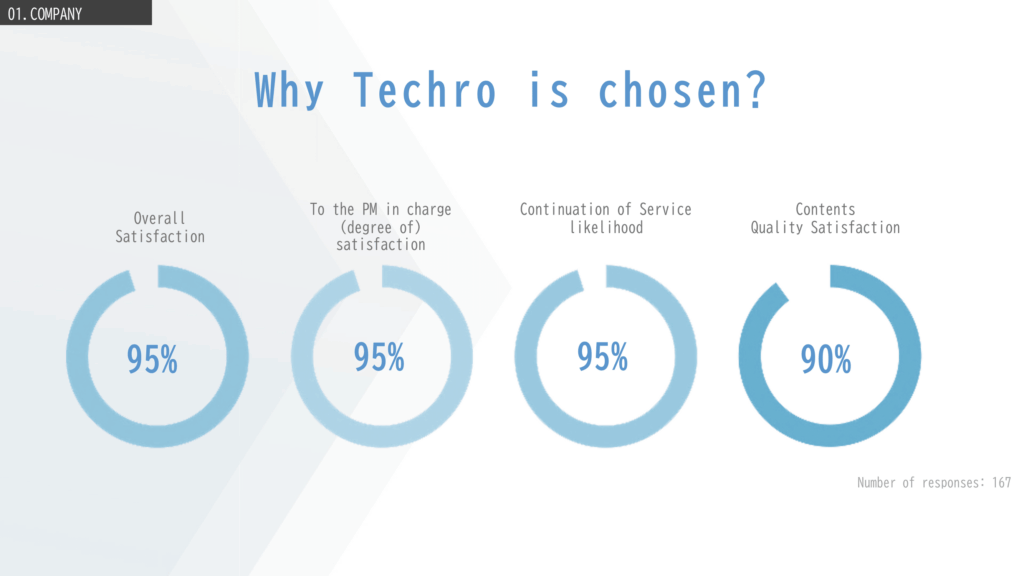
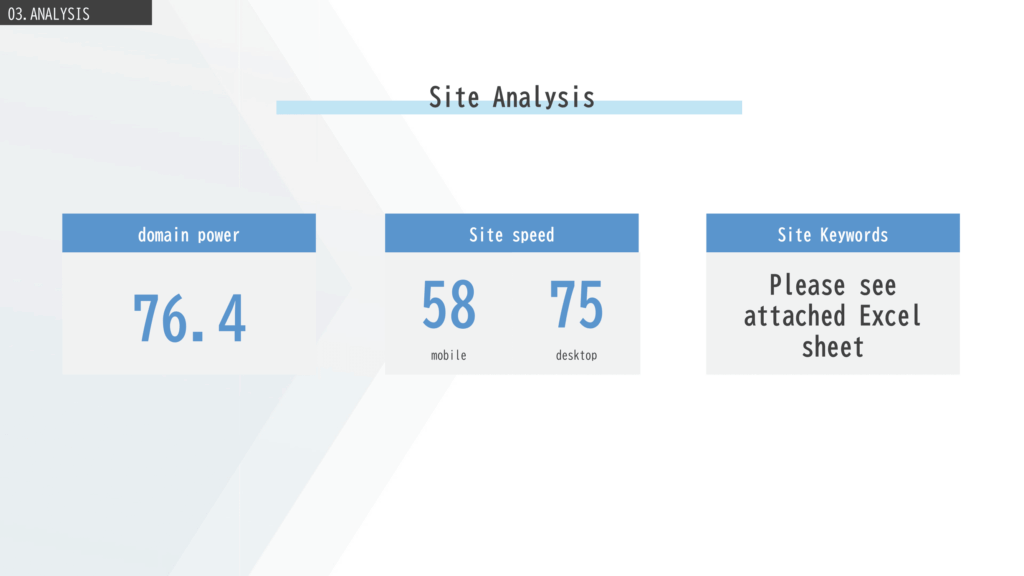
We offer a comprehensive support menu and track record, from strategy design to production, operation, and performance measurement.
- Explaining how to launch your own media
- Explaining content marketing
- A must-see for those who want to maximize the effectiveness of their owned media
- And more
About B2B Business Models

B2B refers to a business model in which companies provide products or services to other companies.
Typical examples include:
- Wholesaling products to retail stores
- Developing and selling systems for businesses
- Selling parts or raw materials to manufacturers
All of the above are considered B2B business models.
In this section, we also explain the differences between B2B and B2C—two models that are often compared—as well as other business models beyond company-to-company and company-to-consumer transactions.
What Is the Difference Between B2B and B2C?
The major difference between B2B and B2C lies in the type of customer they target.
B2B is derived from the word “Business” and involves transactions with corporations or legal entities.
In contrast, B2C comes from “Customer,” meaning individual consumers.
While B2B targets companies as customers, B2C focuses on individual consumers.
Compared to B2B, the average transaction value in B2C is significantly lower. However, B2C has advantages such as a much larger target audience and a higher likelihood of purchase due to relatively low-priced products.
Business Models Other Than B2B and B2
In addition to B2B and B2C, there are several other business models, including:
- C2C
- B2E
- B2G
- G2C
- D2C
C2C, which has gained attention with the development of the internet, includes examples such as flea market apps and online auctions.
(C2C refers to business models where transactions occur between individual consumers.)
Providing company cafeterias, office convenience stores, or internal product sales to employees as part of employee benefits is also considered a form of B2E.
There are many other business models, and their classification depends on the relationship between the seller of goods or services and the customer.
For a more detailed explanation of business models, please see the following article:
Related article: B2B Sales Strategies in Japan: How to Build a Scalable and Effective Sales Engine in 2026
Five B2B Business Model Examples

Here are five examples of B2B business models:
- Microsoft
- M-Mart Co., Ltd.
- Money Forward, Inc.
- ZOZO, Inc.
- HubSpot
Each example is explained below.
1. Microsoft
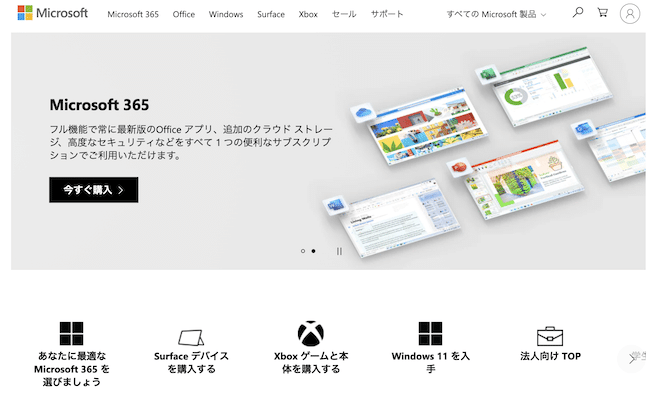
Source: Microsoft
Microsoft provides a business model example through its product “Microsoft 365.”
The company shifted its service model from a one-time purchase to a monthly subscription.
By subscribing to the monthly service, customers can enjoy benefits such as:
- Always using the latest version of the software
- Access to expert support when issues arise or questions occur
This model turns customers into fans of the company and its services, encouraging continuous use of the brand.
2. M-Mart Co., Ltd
Source: M-Mart
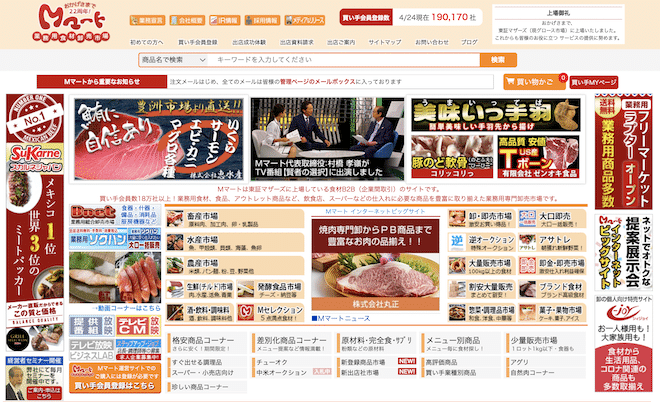
This is an example of “M-Mart,” an e-commerce site specializing in food ingredients.
The site cannot be used by general consumers.
- Only food-related businesses and stores can register as members
- Only manufacturers, wholesalers, producers, and importers can list products
This exclusivity is a defining feature.
Buyers can procure products easily and affordably online, while sellers gain access to customers likely to make bulk purchases.
By limiting both sellers and buyers, this business model increases specialization and targets the needs of a specific segment.
3. Money Forward, Inc.
Source: Money Forward, Inc.
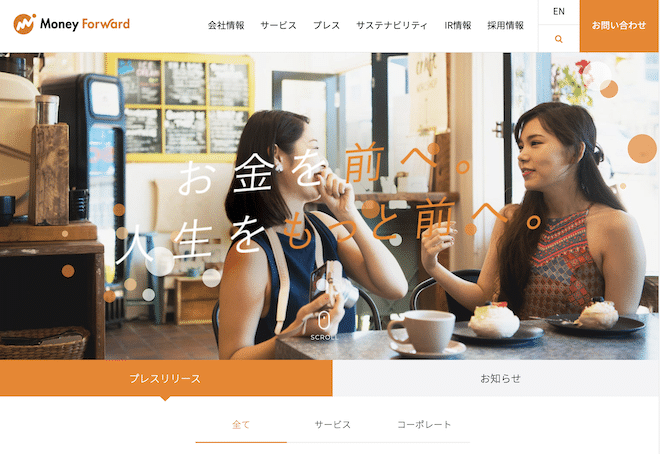
This example introduces “Money Forward Bizpedia,” operated by Money Forward, which provides web-based financial services for individuals and businesses.
The media targets:
- Small and medium-sized business owners
- Sole proprietors
It primarily publishes information that customers seek, such as back-office efficiency improvements.
A key feature of the site is the placement of multiple banners that lead users to the company’s own services.
Readers click these banners after reading articles, generating interest in and registrations for Money Forward’s services.
4. ZOZO, Inc.
Source: ZOZO, Inc.
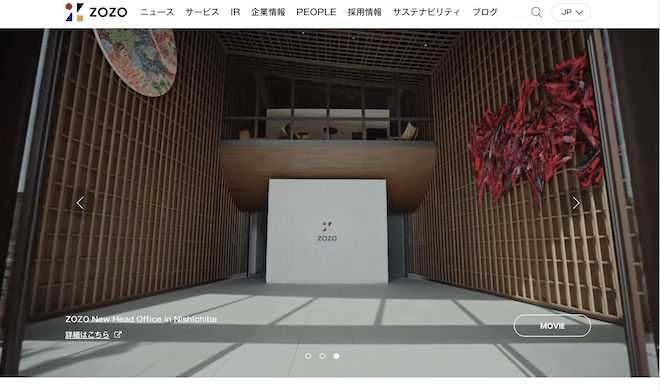
This is a business model example of ZOZO, the operator of ZOZOTOWN, which sells apparel products.
At first glance, ZOZOTOWN may appear to be a purely B2C service. However, it also operates a B2B consignment sales business for apparel companies.
Apparel companies store their products in ZOZOTOWN’s warehouses, and ZOZOTOWN handles sales and shipping.
ZOZOTOWN earns revenue through commissions paid by the apparel companies for sold products.
This allows apparel brands without e-commerce expertise to sell easily, while ZOZOTOWN avoids inventory risk—making it a win-win model.
This is an example of opening new sales channels in the apparel industry and driving ZOZOTOWN’s growth.
5. HubSpot

Source: HubSpot
HubSpot is an example of a company that proposed a new marketing approach and developed systems to support it.
The company openly shared its proprietary methodology known as “Inbound Marketing.”
By also providing system services that allow any company to implement this approach, HubSpot’s tools gained widespread adoption both domestically and internationally.
In 2021, HubSpot exceeded $1 billion in revenue, demonstrating how a new marketing methodology has been embraced by companies across borders.
B2B businesses are characterized by ongoing, long-term transactions.
This example shows that by offering a system that solves problems across industries and job roles, even a single service can scale into a large business.
Five Key Points for Making a B2B Business Model Successful
The following five points are critical to success in B2B business models:
- Clarify customer needs
- Differentiate from competitors
- Build trust with customers
- Offer products and services at the right timing
- Identify the final decision-maker
Each point is explained below.
Point 1: Clarify Needs
B2B customers are companies and organizations.
Therefore, it is essential to clearly identify what the client company needs, as well as its challenges and issues.
Consider:
- What benefits your product or service can provide
- What problems it can solve
Then work backward to design an approach that leads to a successful deal.
Building long-term relationships and uncovering customers’ latent needs also contributes to success.
Point 2: Differentiate from Competitors
To succeed in B2B business, it is important to identify strengths unique to your company that competitors do not have.
Analyze strengths such as:
- Price
- Quality
- Past achievements
These strengths can then be used as selling points during sales meetings and negotiations.
If you cannot clearly differentiate from competitors or are competing on the same terms as large companies, it becomes difficult to be chosen. Uniqueness is key.
Point 3: Build Trust with Customers
Building relationships with customers is essential for B2B success.
B2B is a business model where results are rarely immediate.
Prioritizing trust through consistent communication, regular updates, and strict adherence to deadlines is crucial.
Abandoning leads simply because they do not convert quickly is not a good strategy.
Continuing tailored outreach based on interest level and current demand increases the likelihood of closing deals.
Point 4: Offer Products and Services at the Right Time
In some cases, customers may not convert immediately due to budget constraints or timing issues.
Even if the customer is interested, a mismatch in timing can prevent a deal.
It is therefore essential to understand the customer’s situation, fiscal year-end, and budget planning cycles when making proposals.
Point 5: Identify the Final Decision-Maker
Unlike B2C, where individual consumers are the main target, B2B often involves:
- Multiple stakeholders in decision-making
- Final decision-makers who are not the direct point of contact
Even if the contact person is motivated, the deal may fail without approval from the final decision-maker.
Identifying who holds decision-making authority early allows for more efficient and effective sales efforts.
Summary: Key Perspectives Needed for Future B2B Sales Strategies
In this article, we explained:
- What a B2B business model is
- Examples of B2B business models
- Key points for achieving success
By using successful B2B business models as references when building your own business, you can expect more efficient operations and cost-effective business growth.
However, some companies may struggle because they lack the know-how to design a business model internally or cannot find case studies that closely resemble their own business.
If it is difficult to solve these challenges in-house, outsourcing to external experts is also a viable option.
At Techro Inc., we provide hands-on web marketing support for B2B and D2C companies.
We also offer a free resource titled “The Ultimate B2B Sales Strategy That Achieved a 61% Opportunity Conversion Rate.”
This material introduces our lead management techniques, so companies interested in real-world B2B sales examples are encouraged to take advantage of it.
Free owned media management service materials
We offer a comprehensive support menu and track record, from strategy design to production, operation, and performance measurement.
- Explaining how to launch your own media
- Explaining content marketing
- A must-see for those who want to maximize the effectiveness of their owned media
- And more