BLOG
Japan Marketing Strategy: A Complete Guide for Global Companies Entering the Japanese Market
Japan is the world’s third-largest economy and one of the most sophisticated consumer markets globally. However, many foreign companies fail not because their product is weak—but because their Japan marketing strategy is not designed for the realities of the Japanese market.
If you are planning to enter Japan or strengthen your presence here, understanding how marketing strategy in Japan differs from Western markets is essential.
This guide explains:
- The core mindset behind Japanese marketing strategy
- What makes Japan uniquely different from overseas markets
- Practical frameworks to build an effective strategy
- How to localize without losing global brand consistency
If you’re interested in web marketing, be sure to also check out our Web Marketing Handbook, which is currently available for free.
Free owned media management service materials

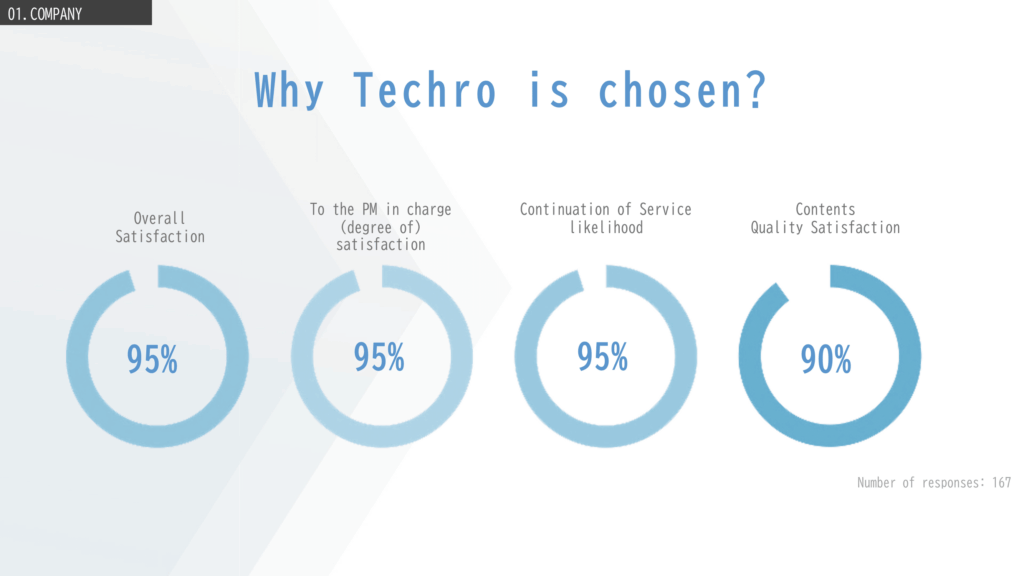
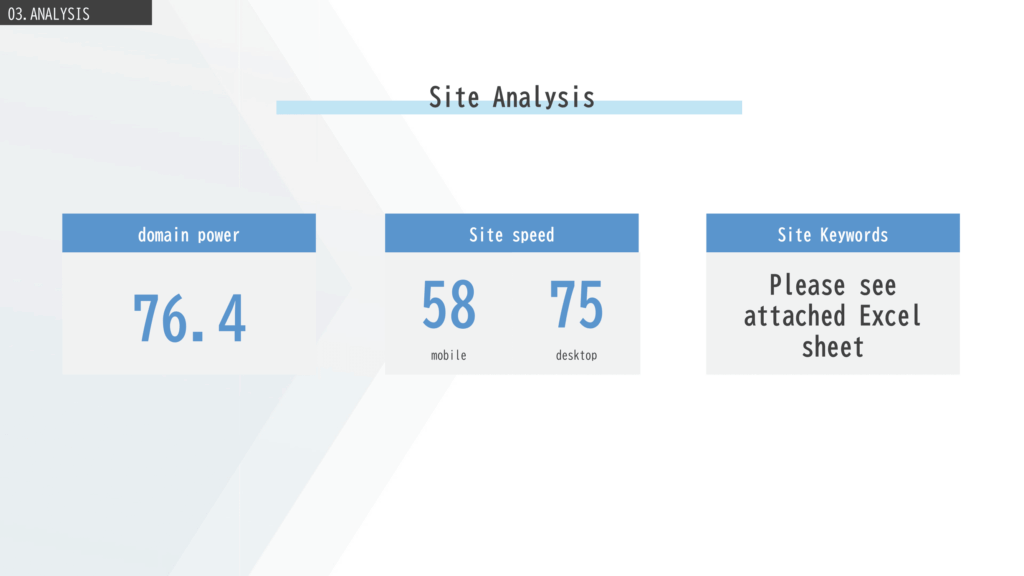
We offer a comprehensive support menu and track record, from strategy design to production, operation, and performance measurement.
- Explaining how to launch your own media
- Explaining content marketing
- A must-see for those who want to maximize the effectiveness of their owned media
- And more
Understanding the Mindset Behind a Japan Marketing Strategy

Before tactics, before channels, before campaigns—Japan requires a different strategic foundation.
Trust Before Conversion
In many Western markets, marketing often aims at speed:
- Quick lead generation
- Aggressive promotion
- Rapid scaling
In Japan, the priority is different.
Trust, credibility, and social proof come first.
Japanese customers—both B2C and B2B—tend to:
- Research extensively
- Compare competitors carefully
- Value brand reputation and history
- Seek reassurance before purchase
A strong Japan marketing strategy must therefore focus on:
- Long-term brand positioning
- Authority building
- Consistent messaging
- High-quality, detailed information
Short-term campaigns alone rarely succeed.
Risk Aversion and Consensus Culture
Japan has a high-context communication culture and a relatively risk-averse business environment.
Decision-making often involves:
- Multiple stakeholders
- Internal consensus (ringi process in B2B)
- Careful documentation
This affects marketing strategy in several ways:
- Messaging must reduce perceived risk
- Case studies and testimonials are critical
- Guarantees, track records, and stability matter
In short: credibility is strategy.
How Japan Marketing Strategy Differs from Overseas Markets

Understanding the differences is key to avoiding common mistakes.
Localization Is Not Translation
One of the most common misunderstandings foreign companies make when entering Japan is assuming that translating their global marketing materials into Japanese is sufficient. In reality, effective Japan marketing strategy requires deep localization—not simple language conversion.
Translation changes words. Localization adapts meaning, tone, structure, and context.
Japanese business communication places strong emphasis on subtlety, hierarchy, and risk awareness. Messaging that works in the U.S. or Europe—often bold, benefit-driven, and highly assertive—can feel overly aggressive or untrustworthy in Japan. Direct claims such as “No.1,” “Best in the Market,” or “Guaranteed Results” may trigger skepticism unless supported by clear data, third-party validation, or detailed explanation.
Localization also affects positioning. In Western markets, differentiation often centers on disruption and innovation. In Japan, differentiation may need to emphasize reliability, track record, operational stability, and long-term partnership potential. The emotional drivers behind purchasing decisions differ, and marketing strategy must reflect those motivations.
Beyond messaging, localization extends to:
- Website structure and information depth
- Call-to-action design
- Visual presentation
- Search behavior and keywords
- Website structure and information depth
Japanese buyers expect comprehensive, well-organized content. Minimal landing pages that perform well overseas may appear incomplete or lacking credibility in Japan.
- Call-to-action design
Aggressive CTAs such as “Start Now” or “Buy Today” often underperform. Softer entry points like “Request Information” or “Download Materials” align better with the research-driven buying process.
- Visual presentation
Design preferences in Japan tend to favor clarity, detailed explanations, and information density rather than large whitespace and bold minimalism.
- Search behavior and keywords
Japanese users search differently, often using longer, descriptive queries. Direct translation of English keywords frequently misses actual local search intent.
True localization requires understanding Japanese consumer psychology, decision-making processes, and communication norms. Companies that invest in culturally aligned messaging, native-level content creation, and locally informed strategy are far more likely to build trust and achieve sustainable growth.
In Japan, marketing success is not about sounding global—it is about feeling locally credible.
Information Depth Matters
In many Western markets, simplicity sells. Landing pages are streamlined, messaging is concise, and the goal is often to reduce friction by limiting the amount of information presented upfront. However, in Japan, a different dynamic is at play. Information depth is not a barrier to conversion—it is a trust-building mechanism.
Japanese buyers, particularly in B2B environments, tend to conduct extensive research before initiating contact. Decision-making is rarely made by a single individual. Instead, multiple stakeholders review materials, compare vendors, and carefully evaluate risk. In this context, a website that feels “too simple” can be perceived as lacking credibility or substance.
Rather than asking, “How can we say this in fewer words?” a Japan-focused marketing strategy should ask, “Have we provided enough detail to remove uncertainty?”
This difference appears in several areas.
First, service descriptions. Japanese prospects expect to see detailed explanations of processes, implementation steps, timelines, pricing structures (even if indicative), and case studies. Abstract benefit statements without operational clarity may raise doubts.
Second, proof elements. Testimonials, numerical results, client logos, white papers, FAQs, and downloadable materials significantly increase perceived reliability. The more structured evidence you provide, the easier it becomes for internal champions to advocate for your solution within their organization.
Third, transparency. Clear information about company history, leadership profiles, physical office location, and corporate philosophy all contribute to credibility. In Japan, corporate stability and reputation are important selection criteria, especially for long-term partnerships.
Importantly, “information depth” does not mean clutter or poor design. It means layered content architecture: high-level summaries supported by expandable sections, detailed pages, and downloadable resources. This approach allows both quick readers and thorough evaluators to find what they need.
In short, while Western marketing often optimizes for speed, Japan marketing strategy optimizes for reassurance. Companies that provide structured, comprehensive, and transparent information are far more likely to earn trust—and ultimately, business—in the Japanese market.
Brand Reputation Is Strategic Capital
In overseas markets, aggressive growth tactics and rapid performance wins are often prioritized. Short-term campaigns, bold positioning, and strong promotional messaging can quickly generate leads and revenue. In Japan, however, brand reputation functions as long-term strategic capital. It is accumulated slowly, protected carefully, and leveraged as a core competitive advantage.
Japanese companies and buyers place significant weight on credibility, stability, and social proof. A brand is not evaluated solely on product features or price competitiveness. Instead, it is assessed through a broader lens: corporate history, client portfolio, industry presence, media coverage, partnerships, and even leadership visibility.
In B2B particularly, reputation reduces perceived risk. Because purchasing decisions often involve multiple departments and hierarchical approval processes, internal decision-makers must justify their choices. Selecting a well-regarded, reputable company is safer than choosing an unknown but potentially innovative alternative. In this environment, brand trust becomes a decision shortcut.
This mindset influences marketing strategy in several ways.
First, thought leadership matters. Publishing in-depth insights, research reports, webinars, and industry commentary positions a company as credible rather than merely promotional. Expertise must be demonstrated consistently over time.
Second, third-party validation is powerful. Media mentions, awards, certifications, partnerships with recognized organizations, and testimonials from established brands significantly increase perceived reliability. External endorsement carries substantial weight in Japan.
Third, consistency builds trust. Frequent changes in messaging, visual identity, or positioning may create confusion. Japanese audiences tend to value stability and coherence. A long-term narrative aligned with corporate values is more effective than constantly shifting campaigns.
Importantly, reputation in Japan is cumulative. It is built through sustained presence, careful communication, and reliable delivery—not through short bursts of visibility. This means marketing strategy should extend beyond immediate lead generation to include PR, content marketing, SEO, community engagement, and relationship cultivation.
In short, while overseas markets may reward speed, Japan rewards credibility. Companies that treat brand reputation as a strategic asset—rather than a byproduct of marketing—position themselves for sustainable success in the Japanese market.
Related Article: Why Japan Web Marketing Is Different?
Core Components of an Effective Japan Marketing Strategy
Successfully entering or expanding in Japan requires more than translating global campaigns. An effective Japan marketing strategy is built on structural trust, long-term positioning, and market-specific execution. Below are the essential components that define high-performing strategies in the Japanese market.
1. Deep Market and Customer Understanding
In Japan, surface-level segmentation is rarely sufficient. Buyers expect messaging that reflects a clear understanding of their industry structure, internal decision-making processes, and operational challenges.
This requires more than demographic targeting. Companies must analyze:
- Industry-specific regulations and standards
- Competitive positioning within Japan (not just globally)
- Buyer roles involved in consensus decision-making
- Risk sensitivity and internal approval dynamics
Particularly in B2B markets, purchasing decisions often involve multiple stakeholders. A strong strategy maps messaging to each layer of the organization—from operational users to executive approvers—while maintaining a consistent narrative.
Without this depth, marketing risks appearing generic, which significantly weakens credibility in Japan.
2. Trust-Centered Brand Positioning
Trust is the foundation of Japanese marketing strategy. Unlike markets that prioritize speed and bold differentiation, Japan rewards reliability, stability, and proven track records.
Effective positioning should emphasize:
- Long-term commitment to the Japanese market
- Evidence-based claims supported by data
- Case studies and measurable results
- Partnerships, certifications, and media recognition
Rather than aggressive promises, Japanese audiences respond to structured, well-supported communication. The goal is to reduce perceived risk, not to create hype.
This also means consistency is critical. Visual identity, tone of voice, and corporate messaging should align across all touchpoints—website, sales materials, PR, and digital campaigns.
3. Content-Driven Inbound Infrastructure
Japan’s digital marketing environment heavily favors organic search and educational content. Decision-makers conduct extensive independent research before contacting vendors.
An effective strategy therefore includes:
- SEO-driven content aligned with Japanese search intent
- Long-form, structured articles and whitepapers
- Industry-specific landing pages
- Case studies tailored to local audiences
Content must be thorough and logically organized. Japanese readers expect depth, clarity, and transparency. Short, high-level promotional copy rarely performs well.
Building this content ecosystem takes time, but it creates compounding value in lead generation and brand authority.
4. Integrated Sales and Marketing Alignment
Marketing in Japan cannot operate independently from sales. Because the sales cycle tends to be longer and relationship-oriented, marketing assets must support each stage of internal approval.
This includes:
- Detailed proposal materials
- ROI documentation
- Industry-specific proof points
- Executive-ready summaries
Web marketing should not only generate leads but also strengthen trust during the evaluation phase. Companies that integrate CRM systems, marketing automation, and structured follow-up processes see significantly stronger performance.
5. Long-Term Commitment and Continuous Optimization
Finally, successful Japan marketing strategies are built for endurance, not quick wins. SEO, brand reputation, and trust accumulation require sustained investment.
This involves:
- Continuous content production
- Regular performance analysis
- Ongoing keyword and competitive monitoring
- Iterative campaign refinement
Japanese markets reward persistence. Companies that treat marketing as a long-term asset—rather than a short-term experiment—consistently outperform competitors who pursue rapid but shallow expansion.
In summary, an effective Japan marketing strategy combines deep localization, trust-driven positioning, structured content development, and long-term execution discipline. Companies that align these components create not only visibility, but durable market credibility.
Frameworks to Build a Japan Marketing Strategy

Building a Japan marketing strategy requires more than applying global templates. While classic strategic frameworks remain useful, they must be adapted to Japan’s trust-driven, consensus-based business culture. Below are practical frameworks that can be effectively localized for the Japanese market.
1. STP Framework Adapted for Consensus-Based Buying
The traditional Segmentation, Targeting, Positioning (STP) model is a strong starting point, but in Japan, segmentation must go beyond industry and company size.
Because purchasing decisions often involve multiple stakeholders, segmentation should include:
- Decision-making structure (top-down vs. consensus-driven)
- Risk sensitivity and regulatory exposure
- Organizational maturity and digital adoption level
Targeting in Japan is less about aggressive expansion and more about credibility within specific niches. Companies that focus narrowly on one industry segment and build strong case studies often outperform those attempting broad coverage.
Positioning should emphasize stability, long-term support, and proven results rather than disruptive or revolutionary messaging. In Japan, reducing perceived risk is often more persuasive than promising dramatic transformation.
2. 3C Analysis with Emphasis on Competitive Density
The 3C framework (Company, Customer, Competitor) is particularly powerful in Japan, where markets tend to be saturated and highly competitive.
Customer analysis should explore not only needs but also decision criteria. Japanese buyers often prioritize reliability, after-sales support, and corporate reputation over price alone.
Competitor analysis is equally critical. Many industries have established domestic players with strong brand loyalty. Understanding their messaging style, pricing structure, and partnership networks helps identify differentiation opportunities.
Company analysis must assess whether your organization can demonstrate long-term commitment to Japan. Without local presence, Japanese-language support, or cultural alignment, strategic positioning may lack credibility.
3. AIDA and the Extended Trust Funnel
While AIDA (Attention, Interest, Desire, Action) remains relevant, Japan often requires an extended funnel that incorporates trust-building stages.
In Japanese B2B marketing, the funnel may look like:
- Awareness through SEO or industry media
- Interest via educational content
- Trust development through case studies and reputation signals
- Internal consensus formation
- Action after risk validation
This means marketing strategies must include content and communication tailored to each stage—not just lead generation.
4. The Long-Term Content Authority Model
Given Japan’s reliance on research-driven purchasing, a content authority model is essential. This framework focuses on building domain authority and thought leadership over time.
It involves:
- Developing pillar content around core industry topics
- Supporting them with structured subtopics
- Publishing consistently over 12–24 months
- Optimizing based on search behavior trends
Rather than campaign-based bursts, this approach creates sustainable inbound growth.
5. PDCA Cycle for Continuous Optimization
The PDCA (Plan–Do–Check–Act) cycle is deeply embedded in Japanese business culture. Integrating this framework into marketing strategy enhances internal acceptance and alignment.
- Plan: Establish clear KPIs and objectives aligned with business goals.
- Do: Execute campaigns and content initiatives systematically.
- Check: Analyze performance data and feedback.
- Act: Refine strategy based on measurable outcomes.
Japanese organizations value structured improvement processes. Demonstrating PDCA-driven marketing management strengthens both internal buy-in and external credibility.
An effective Japan marketing strategy does not rely on a single framework. Instead, it integrates segmentation discipline, competitive awareness, trust-building processes, content authority development, and structured optimization. When adapted thoughtfully, these frameworks provide both strategic clarity and cultural alignment in the Japanese market.
Current Trends in Japan Marketing Strategy (2026 Outlook)
As the business landscape evolves in Japan, marketing strategies are adapting to new technologies, shifting buyer behavior, and changing expectations around trust and engagement. Looking ahead to 2026, several key trends are emerging that distinguish Japan’s market from global patterns and highlight opportunities for companies that localize with strategic precision.
1. AI-Augmented Personalization with Cultural Sensitivity
Artificial intelligence is transforming marketing worldwide, but Japan’s adoption pattern reflects a dual emphasis: technological innovation combined with cultural nuance. AI tools are increasingly used for customer segmentation, predictive analysis, and content optimization. Yet unlike markets where automation can overshadow human input, Japanese teams tend to prioritize human oversight to ensure cultural coherence and message appropriateness.
For example, AI can help identify high-value segments based on browsing behavior, but marketers still review and adapt messaging to align with Japanese conversational norms and business etiquette. This trend is accelerating the use of hybrid models where AI amplifies insights, but strategist input shapes final communication.
2. Integrated Search Ecosystems: SEO as the Backbone, Not an Add-On
Search behavior in Japan continues to be research-driven, especially in B2B industries where buyers want detailed information before engaging with vendors. Rather than relying solely on paid search or outbound campaigns, leading companies are building integrated search ecosystems that unify SEO, content marketing, and social credibility signals.
In 2026, SEO is no longer viewed as a narrow technical task but as the backbone of inbound visibility. Detailed pillar content, educational resources, optimized landing pages, and structured internal linking help Japanese buyers move smoothly from awareness to consideration without dropping out due to lack of information. This trend reflects a strategic shift from short-term traffic targets to long-term authority and trust.
3. First-Party Data and Privacy-Aware Personalization
With global shifts in privacy regulations and decreasing reliance on third-party tracking, Japanese companies are accelerating their investment in first-party data strategies. Collecting and utilizing customer interaction data from owned channels—such as corporate websites, content downloads, webinars, and CRM systems—allows marketers to tailor messaging and nurture prospects more effectively.
Privacy awareness is high in Japan, and buyers appreciate transparent data practices. Successful marketing strategies in 2026 will not only leverage first-party data for personalization but also communicate how customer information is used responsibly. This builds trust and enhances engagement over time.
Related Article: Current Trends in Japan Web Marketing
Common Mistakes Foreign Companies Make
Even global brands with strong track records often struggle in Japan. The issue is rarely product quality or technological capability. Instead, failure usually stems from a misunderstanding of how Japan marketing strategy must be fundamentally adapted to local expectations.
Below are the most common and costly mistakes foreign companies make when entering the Japanese market.
1. Treating Japan as “Just Another Asian Market”
One of the biggest strategic errors is grouping Japan together with other Asian markets.
Japan is:
- Economically mature
- Highly competitive
- Culturally distinct
- Extremely quality-sensitive
Strategies that work in Southeast Asia or even South Korea do not automatically translate to Japan. Consumer behavior, pricing expectations, digital maturity, and brand evaluation standards are different.
Japan requires its own dedicated marketing strategy—not a regional afterthought.
2. Over-Relying on Global Messaging Without True Localization
Many foreign companies attempt “light localization”:
- Direct translation of global website content
- Reusing global campaign visuals
- Maintaining Western tone and messaging structure
This often results in communication that feels:
- Too aggressive
- Too simplistic
- Too self-promotional
- Culturally tone-deaf
Japanese audiences tend to value:
- Modesty over bold claims
- Proof over hype
- Clarity over cleverness
Localization must go beyond language. It requires adapting:
- Value propositions
- Case studies
- Pricing presentation
- Trust signals
- Visual design expectations
Without cultural adaptation, even strong global brands can appear unfamiliar or untrustworthy.
3. Prioritizing Short-Term Performance Over Long-Term Trust
In many Western markets, marketing performance is measured heavily by short-term KPIs:
- Immediate conversions
- Cost per acquisition
- Rapid growth metrics
While these matter in Japan, trust-building plays a much larger role in conversion.
Foreign companies often:
- Launch aggressive paid campaigns
- Push hard sales messaging
- Expect fast ROI
But Japanese buyers typically:
- Conduct detailed research
- Compare competitors thoroughly
- Seek internal consensus
- Evaluate long-term stability
If brand recognition and credibility are weak, paid advertising alone will not convert efficiently.
A sustainable Japan marketing strategy requires parallel investment in:
- Brand positioning
- Thought leadership
- Public relations
- Educational content
Without trust, performance marketing becomes expensive and inefficient.
4. Underestimating the Importance of Detailed Information
Minimalist landing pages that perform well in Western markets often underperform in Japan.
Japanese audiences expect:
- Comprehensive product explanations
- Technical specifications
- Clear pricing structures
- Corporate background information
- Frequently asked questions
- Support details
A lack of information may be interpreted as:
- Lack of transparency
- Lack of seriousness
- Lack of stability
Foreign companies sometimes worry that too much information reduces conversion. In Japan, insufficient detail can reduce trust—and therefore conversion.
Depth signals credibility.
5. Ignoring the Role of Internal Decision-Making Processes (Especially in B2B)
In B2B marketing in Japan, purchasing decisions are rarely made by a single executive.
The process often involves:
- Multiple departments
- Formal documentation
- Consensus-building
- Risk evaluation
Foreign companies sometimes:
- Focus messaging only on top executives
- Skip middle-management persuasion
- Overlook internal justification materials
However, mid-level managers often need:
- Data-driven justification
- Case studies
- Risk reduction arguments
- ROI projections
If marketing materials do not support internal consensus-building, deals stall.
A strong Japan marketing strategy supports the internal buyer journey—not just the external one.
6. Neglecting Japanese-Language SEO
Some foreign companies rely on:
- English-language websites
- Directly translated keywords
- Global SEO assumptions
However, search behavior in Japan is unique:
- Keywords are often longer and more specific
- Search intent differs culturally
- Industry terminology varies
- Native phrasing matters deeply
Direct translations of English keywords often miss actual search volume.
Without proper Japanese SEO research:
- Organic traffic remains low
- Brand visibility suffers
- Competitors dominate search rankings
Japanese-language SEO is not optional—it is foundational.
7. Underestimating Domestic Competitors
Foreign brands sometimes assume that international reputation alone guarantees advantage.
However, domestic Japanese companies often have:
- Long-established customer relationships
- Strong trust networks
- Deep cultural understanding
- Refined service quality
Even if their technology appears less advanced, they may outperform foreign entrants due to trust and local alignment.
Ignoring local competitors—or failing to differentiate clearly—can result in slow adoption.
8. Failing to Invest in Local Presence and Relationship Building
Japan is a relationship-driven market.
Foreign companies that attempt to operate remotely without:
- Local representatives
- Japanese-speaking support
- Clear commitment to the market
May face skepticism.
Customers often ask:
- Is this company committed to Japan long-term?
- Will support be available in Japanese?
- Can we trust this partner in the future?
Marketing strategy must signal permanence, not experimentation.
9. Misjudging Communication Style
Western marketing often emphasizes:
- Strong calls-to-action
- Bold differentiation
- Emotional storytelling
Japanese communication style tends to favor:
- Logical structure
- Politeness and professionalism
- Evidence-based persuasion
- Subtle differentiation
Overly aggressive messaging can feel uncomfortable or untrustworthy.
Tone adaptation is strategic—not cosmetic.
10. Expecting Immediate Scale
Japan is a large market, but penetration takes time.
Foreign companies sometimes:
- Set unrealistic growth targets
- Withdraw too quickly
- Interpret slow early traction as failure
However, once trust is established, customer loyalty can be extremely strong.
Japan rewards consistency and long-term commitment.
BtoB Marketing Specialist: Techro Co., Ltd.
Techro Co., Ltd. is a web marketing support company specializing in lead generation for BtoB (business-to-business) companies.
It excels in owned media management and content marketing, contributing to the growth of numerous client businesses.
In December 2024, the company was listed on the Fukuoka Stock Exchange’s Fukuoka PRO Market, marking it as a rapidly growing company.
【Techro Support】
Success Story ①: LG Breakthrough Co., Ltd. “Jichitai Business.com”
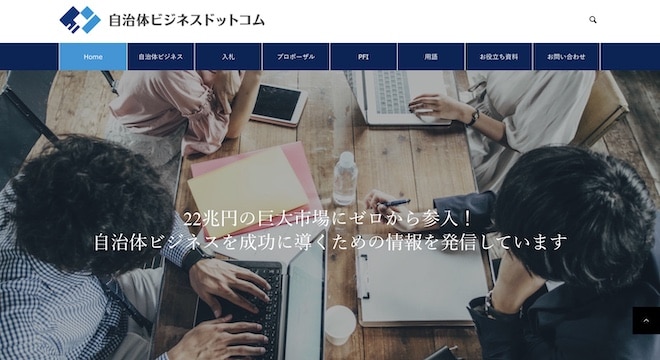
| Media name | Jichitai Business.com |
| Media URL | https://www.b2lg.co.jp/jichitai/ |
| Concept / Theme | Information to help succeed in the local government business |
| Operating company | LG Breakthrough Co., Ltd. |
| Launch year | 2017 |
| Objectives | Lead generation New customer acquisition |
“Jichitai Business.com” is a company that provides solutions for businesses seeking to contract work from local governments and public institutions.
Although the company had previously launched an owned media platform, they believed that there were no meaningful online touchpoints with companies, and as a result, the media was not actively operated.
To break this situation, they implemented content marketing. After about six months, page views grew by approximately 20 times. The key reason for this growth was that they continuously recorded performance changes as numerical data when creating content and used those insights to drive improvements.
They also achieved their goal of leveraging the owned media as a core business asset.
Despite being a small company, this is a successful example of automating sales through the effective use of an owned media platform.
Techro’s achievements in supporting LG Breakthrough’s content marketing are introduced on our “Case Studies” page.
【Techro Support】
Success Story ②: J&U Co., Ltd. “PAPER AD”
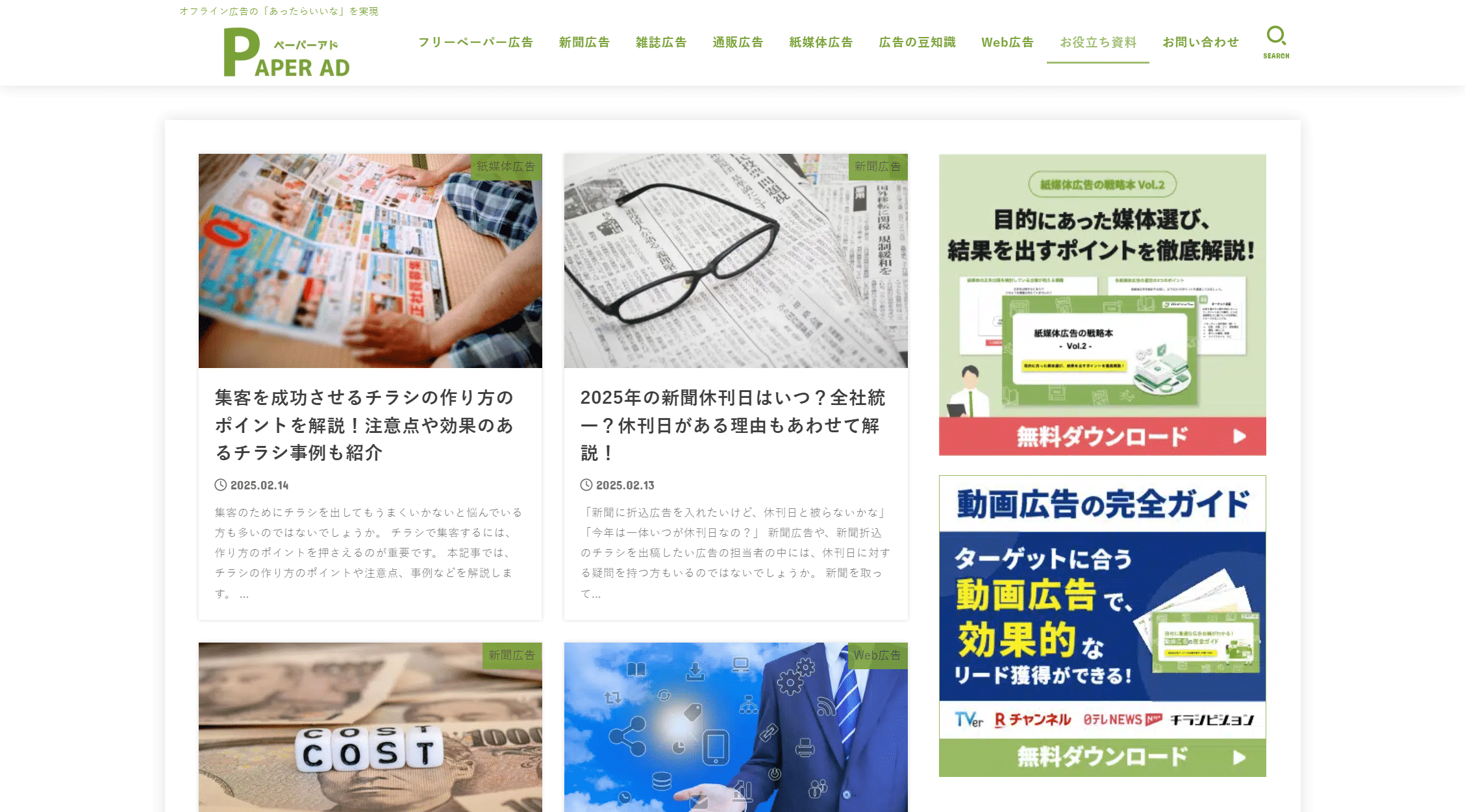
| Media name | PAPER AD |
| Media URL | https://j-you.co.jp/blog/ |
| Concept / Theme | Sharing information about offline advertising |
| Operating company | J&U Co., Ltd. |
| Launch year | 2020 |
| Objectives | Lead generation New customer acquisition |
J&U Co., Ltd., an advertising agency, received support from Techro starting from the launch of their owned media. By launching and continuously operating “PAPER AD,” they succeeded in acquiring new leads from industries that had never generated inquiries before.
Subsequently, we also supported the implementation of HubSpot for lead management and nurturing.
By organizing sales processes and configuring HubSpot, they achieved centralized management and improved efficiency in sales operations. Visualizing sales and inventory status led to a 5% increase in revenue.
You can find more details in the following case studies:
Reference: “Achieving Inquiries from Other Industries and Boosting Sales Motivation Through Owned Media | J&U Co., Ltd.”
Reference: “[Revenue Up 5%] Visualizing Sales Through HubSpot Operations Support—What Were the Measures That Significantly Increased Revenue and Profit Margins Compared to the Previous Year? | J&U Co., Ltd.”
Techro’s achievements in supporting J&U’s content marketing are introduced on our “Case Studies” page.
Reference: “Achieving Inquiries from Other Industries and Boosting Sales Motivation Through Owned Media | J&U Co., Ltd.”
Reference:“[Revenue Up 5%] Visualizing Sales Through HubSpot Operations Support—What Were the Measures That Significantly Increased Revenue and Profit Margins Compared to the Previous Year? | J&U Co., Ltd.”
Techro’s achievements in supporting J&U’s content marketing are introduced on our “Case Studies” page.
【Techro Support】
Success Story ③: Reloclub Co., Ltd. “RELO General Affairs & HR Times”
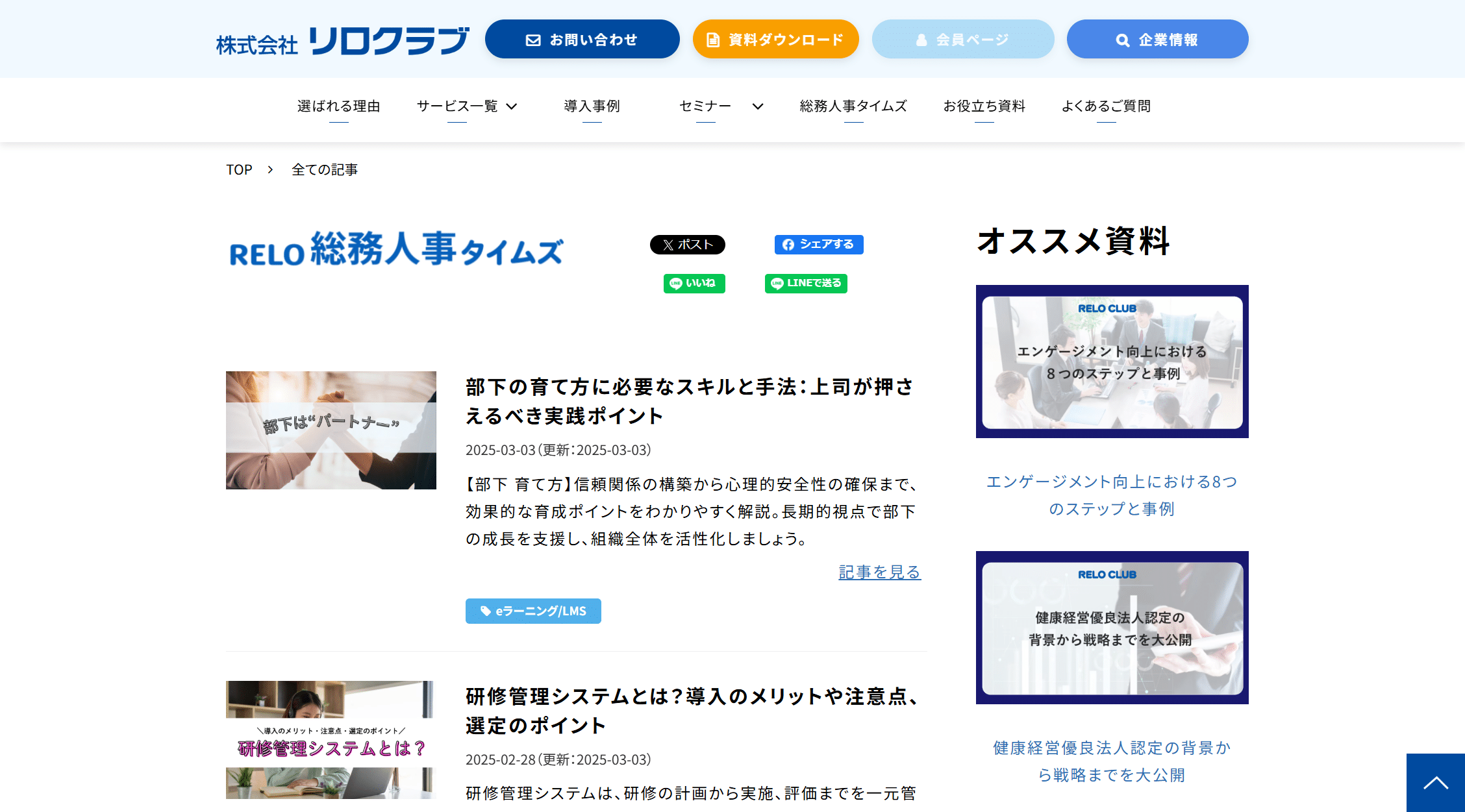
| Media name | RELO General Affairs & HR Times |
| Media URL | https://www.reloclub.jp/relotimes/article |
| Concept / Theme | Information related to general affairs and human resources |
| Operating company | Reloclub Co., Ltd. |
| Launch year | 2023 |
| Objectives | Lead generation New customer acquisition |
Reloclub Co., Ltd. provides employee benefits outsourcing services and operates “RELO General Affairs & HR Times” as its owned media.
Although the site had strong domain authority and high page views, the challenge was that it was not generating inquiries.
After outsourcing the media operations to Techro, we conducted CV-focused keyword selection and site improvements. As a result, inquiries increased, and the media evolved into a stronger revenue-contributing asset.
This is a successful example of revenue growth achieved through CV optimization.
Techro’s achievements in supporting Reloclub’s content marketing are introduced on our “Case Studies” page.
【Techro Support】
Success Story ④: NTT Printing Co., Ltd. “Kachiaru Support”
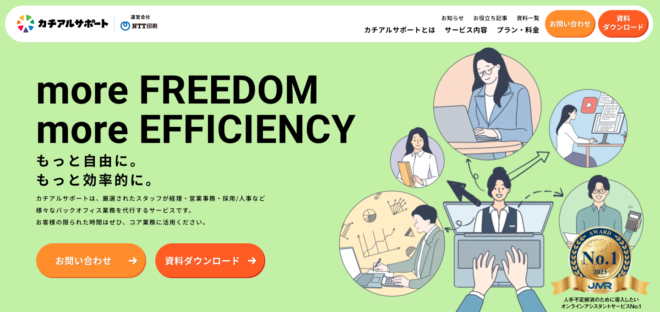
| Media name | Kachiaru Support (Owned Media) |
| Media URL | https://kachiarusupport.nttprint.com/column |
| Concept / Theme | Introducing BPO services |
| Operating company | NTT Printing Co., Ltd. |
| Launch year | 2024 |
| Objectives | Lead generation New customer acquisition |
NTT Printing Co., Ltd. provides BPO services and operates the “Kachiaru Support Owned Media.”
With limited internal resources, the company needed to prepare various content for the owned media while also managing other initiatives such as exhibiting at trade shows once or twice a month. They recognized the need for a partner both in terms of resources and expertise.
By outsourcing owned media operations, they successfully reduced internal workload while achieving tangible results.
Techro’s achievements in supporting NTT Printing’s content marketing are introduced on our “Case Studies” page.
【Techro Support】
Success Story ⑤: JAF Media Works Co., Ltd. “JAF Torecolumn”
| Media name | JAF Torecolumn |
| Media URL | https://jaf-training.jp/column/ |
| Concept / Theme | Sharing information on traffic safety |
| Operating company | JAF Media Works Co., Ltd. |
| Launch year | 2024– |
| Objectives | Lead generation New customer acquisition |
JAF Media Works Co., Ltd. provides JAF Traffic Safety Training and operates “JAF Torecolumn” as its owned media.
The company did not have an internal marketing department. Although they attempted to work on customer acquisition, they were unsure whether their efforts were effective or which initiatives would deliver the best results.
They therefore requested Techro’s owned media support. From launching the media to acquiring page views and conversions, Techro provided end-to-end support, resulting in successful lead generation through content.
Techro’s achievements in supporting JAF Media Works’ content marketing are introduced on our “Case Studies” page.
If you are interested in Japan Web Marketing, be sure to also check out the free Web Marketing Textbook currently available for download.
Free owned media management service materials
We offer a comprehensive support menu and track record, from strategy design to production, operation, and performance measurement.
- Explaining how to launch your own media
- Explaining content marketing
- A must-see for those who want to maximize the effectiveness of their owned media
- And more