BLOG
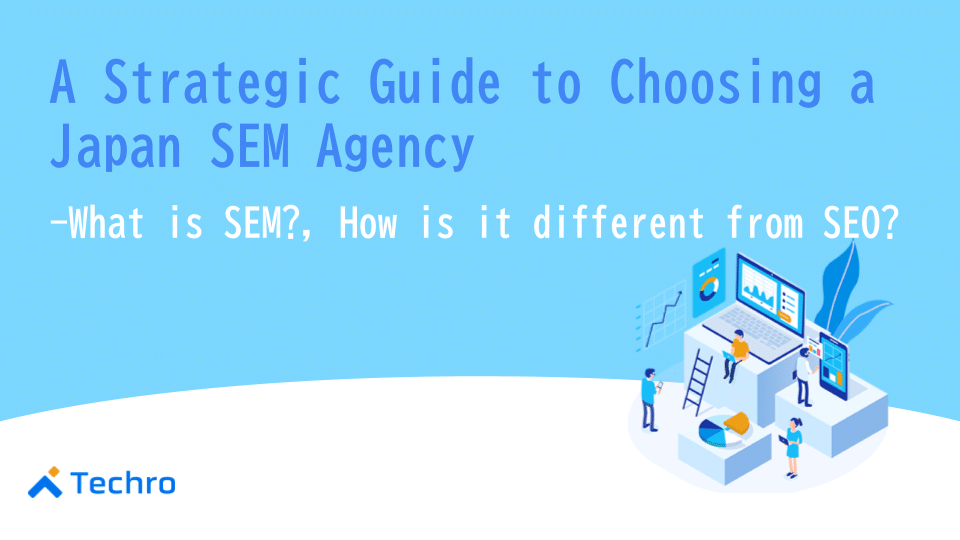
A Strategic Guide to Choosing a Japan SEM Agency -What is SEM? Why is it importants in Japanese market?
Expanding into Japan is a strategic move for many global companies. As the world’s third-largest economy, Japan offers strong purchasing power, sophisticated buyers, and high digital adoption. However, success in search engine marketing requires a deep understanding of local behavior, platforms, and business culture.
If you are searching for a reliable Japan SEM agency, you are likely looking for more than campaign management. You need a partner who understands how Japanese users search, compare, evaluate, and make decisions — especially in B2B markets.
This guide explains how SEM works in Japan, how it differs from Western markets, and how to select the right agency for long-term growth.
Techro Inc. is also distributing materials about its “SEO Consulting Services.”
If you are in charge of BtoB SEO and facing challenges, we encourage you to take a look.
Free owned media management service materials
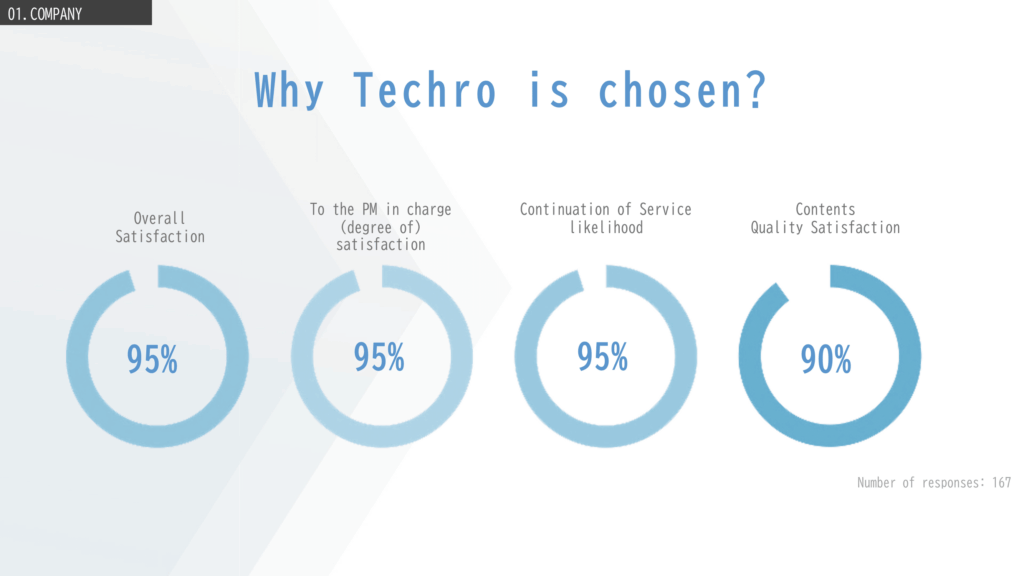
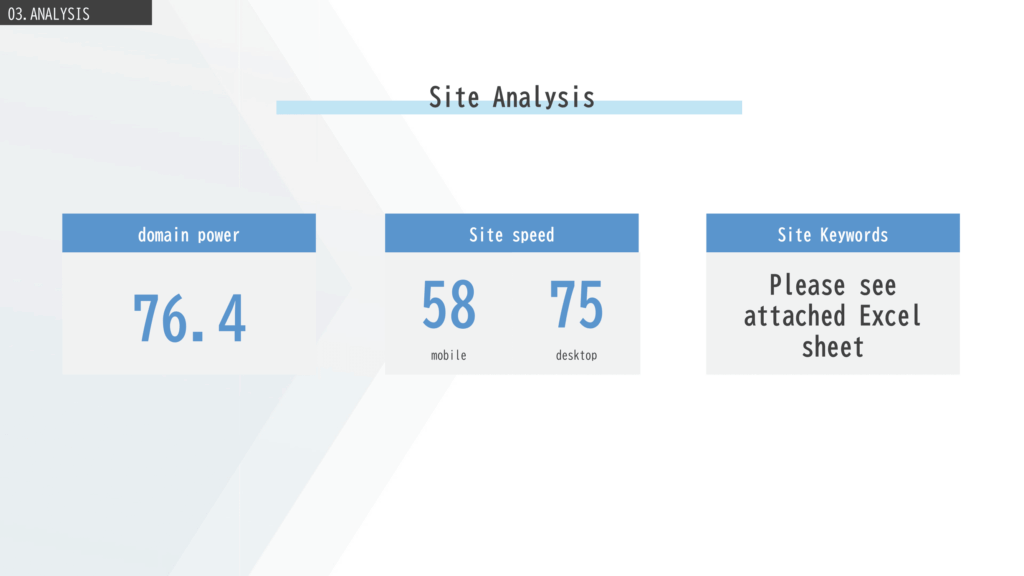
We offer a comprehensive support menu and track record, from strategy design to production, operation, and performance measurement.
- Explaining how to launch your own media
- Explaining content marketing
- A must-see for those who want to maximize the effectiveness of their owned media
- And more
What is SEM?

SEM generally refers to paid search marketing, meaning advertising on search engines such as Google and Yahoo! Japan. In Japan, this typically includes:
- Google Ads (Search campaigns)
- Yahoo! Ads (which still holds meaningful market share in Japan)
- Brand keyword protection campaigns
- High-intent keyword bidding strategies
SEM is performance-driven and delivers immediate visibility. If you launch a campaign today, your ads can appear at the top of search results tomorrow.
For foreign companies entering Japan, SEM is often used for:
- Fast market testing
- Lead generation during early market entry
- Supporting product launches
- Capturing competitor traffic
However, SEM requires continuous ad spend. Once you stop paying, visibility disappears.
What Does a Japan SEM Agency Actually Do?
A Japan SEM agency typically manages paid search campaigns across platforms such as Google Ads and Yahoo! Ads Japan. Unlike many Western markets, Yahoo! Japan still maintains meaningful market share, making dual-platform optimization essential.
Beyond keyword bidding, a high-quality agency should provide:
• Japanese keyword strategy and intent mapping
• Localized ad copywriting aligned with cultural tone
• Landing page optimization for Japanese conversion behavior
• Budget allocation strategy across branded and non-branded terms
• Conversion tracking setup compliant with Japanese privacy norms
SEM in Japan is rarely just about direct-response advertising. It often supports brand credibility and long consideration cycles, particularly in B2B sectors.
Key Differences Between Japan SEM and Western SEM
Understanding these differences is critical when choosing a Japan SEM agency.
| Area | Western Markets | Japan Market |
|---|---|---|
| Decision Process | Individual-driven | Consensus-driven (ringi system) |
| Search Behavior | Transaction-focused | Research-heavy, comparison-driven |
| Ad Messaging | Direct, benefit-first | Detailed, credibility-focused |
| Platform Mix | Google dominant | Google + Yahoo! Japan |
| Conversion Path | Shorter funnel | Longer evaluation phase |
In Japan, searchers often consume multiple pages of information before submitting an inquiry. This means SEM campaigns must support an information journey rather than just push immediate conversion.
Why SEM Alone Is Not Enough in Japan?
Many foreign companies expect paid search to generate rapid pipeline growth. While SEM can drive traffic quickly, Japanese buyers place strong emphasis on trust signals such as:
• Corporate history
• Case studies
• Media mentions
• Whitepapers and educational content
Without these supporting assets, even well-targeted ads may struggle to convert. A strong Japan SEM agency understands that paid search must integrate with SEO, content marketing, and brand positioning.
SEM for B2B in Japan
B2B SEM in Japan requires particular nuance. The search volume for high-intent keywords may be lower than in the US or Europe, but competition for authority is high.
Effective B2B SEM strategies in Japan typically include:
A carefully structured account that separates informational, comparative, and decision-stage keywords. Informational terms often play a larger role than in Western campaigns because Japanese buyers conduct extensive research before contacting vendors.
Landing pages must be localized beyond translation. Japanese business audiences expect formal tone, clear company credentials, and detailed explanations of service scope.
Remarketing is also essential. Given the longer sales cycles, maintaining brand visibility across multiple touchpoints significantly improves conversion rates.
How to Choose the Right Japan SEM Agency

Selecting a Japan SEM agency should be treated as a strategic decision, not a tactical outsourcing task. In Japan’s relationship-driven and trust-based business environment, the right partner can accelerate market penetration, while the wrong one can quietly drain budget without producing meaningful growth. Below are four essential criteria to evaluate — explained in depth rather than as a checklist.
1. Deep Understanding of the Japanese Market
The first and most important factor is whether the agency truly understands how Japanese buyers search, compare, and decide.
Japan is not simply a translated version of Western markets. Search queries often reflect cautious research behavior. B2B buyers frequently gather extensive information before contacting vendors. In addition, search phrasing differs significantly depending on industry, formality level, and even character choice (kanji, hiragana, katakana).
A qualified Japan SEM agency should be able to explain:
- How Japanese keyword intent differs from English search behavior
- Why Yahoo! Japan Ads may still matter depending on the demographic
- How trust signals influence click-through and conversion rates
- How long the average decision cycle runs in your sector
If an agency’s approach sounds like a direct copy of its global campaign structure, adapted only by translation, it is unlikely to produce optimal results.
2. Strategic Thinking Beyond Ad Management
Many agencies focus narrowly on bid adjustments and keyword expansion. However, strong SEM performance in Japan depends on broader strategic alignment.
A reliable agency should discuss:
- How SEM connects with SEO and content marketing
- Whether landing pages are localized at a messaging level, not just language level
- How ad messaging reflects Japanese business culture
- How lead quality will be measured beyond click metrics
For example, in Japanese B2B marketing, a lower click-through rate may still produce stronger lead quality if messaging emphasizes credibility and risk reduction. Agencies that optimize only for volume may overlook this nuance.
Ask how they define success. If the answer centers solely on traffic growth rather than pipeline impact, their perspective may be too limited.
3. Transparent Reporting and Communication Structure
Japanese companies value structured reporting and clarity. Your SEM partner should operate with the same discipline.
Instead of automated dashboards alone, look for agencies that provide:
- Clear monthly performance reviews
- Explanations for budget allocation decisions
- Defined hypotheses for testing
- Structured optimization roadmaps
The ability to explain “why” behind performance trends is more important than simply presenting numbers.
In addition, evaluate communication style during the proposal stage. Are their materials detailed and logically structured? Do they avoid exaggerated promises? Agencies that promise immediate dominance in competitive Japanese markets should be approached with caution.
4. Long-Term Partnership Orientation
SEM in Japan often requires patience. Authority building, brand recognition, and repeated exposure significantly affect results. Buyers tend to compare multiple providers and seek reassurance before converting.
Therefore, choose an agency that demonstrates a long-term perspective.
They should speak about:
- Gradual optimization rather than instant transformation
- Continuous keyword refinement
- Integration with CRM and sales processes
- Strategic budget scaling over time
Short-term campaign launches may generate traffic, but sustainable growth requires consistent optimization and strategic discipline.
Budget Expectations for Japan SEM

When planning a Japan SEM strategy, budgeting should not be approached as a simple “ad spend number.” The Japanese B2B market requires a more structured allocation model that balances media cost, localization quality, and performance optimization. Below are three core budget components you should evaluate carefully.
1. Media Spend (Click Costs and Platform Allocation)
The first and most visible component is your actual advertising budget. In Japan, SEM campaigns typically run on both Google Ads and Yahoo! Japan Ads, as Yahoo! still maintains meaningful market share in certain demographics and industries.
In competitive B2B sectors such as SaaS, IT services, logistics, and consulting, cost-per-click (CPC) can be relatively high due to limited high-intent keyword volume. Unlike larger English-speaking markets where keyword variations are abundant, Japanese search terms tend to be more concentrated, which increases bidding competition.
For mid-sized B2B campaigns entering Japan, a starting monthly media spend often ranges from ¥300,000 to ¥1,000,000. However, this number depends heavily on:
- Keyword competitiveness
- Expected lead volume
- Sales cycle length
- Geographic targeting scope
Importantly, Japanese B2B buyers tend to research thoroughly before converting. This means campaigns often require broader keyword coverage—including informational searches—rather than only bottom-funnel terms. As a result, realistic media budgets should reflect both lead generation and research-stage engagement.
2. Agency Management and Strategic Oversight
SEM in Japan requires more than campaign setup and bid adjustments. Because localization accuracy, audience segmentation, and messaging nuance significantly affect performance, agency management fees typically reflect strategic involvement rather than pure execution.
A professional Japan SEM agency may charge between ¥300,000 and ¥800,000 per month depending on campaign complexity. This usually includes:
- Keyword research tailored to Japanese search behavior
- Ad copy localization and testing
- Ongoing bid optimization
- Performance reporting and strategic reviews
- Cross-platform management (Google + Yahoo! Japan)
For B2B campaigns especially, agencies often provide strategic guidance on lead qualification, CRM integration, and marketing-sales alignment. Lower-cost management options exist, but in Japan’s trust-based business environment, strategic quality often determines ROI more than sheer ad spend.
3. Landing Page Optimization and Conversion Infrastructure
One of the most underestimated budget areas in Japan SEM is conversion infrastructure. Even with strong traffic, poorly localized landing pages dramatically reduce performance.
Japanese buyers expect:
- Detailed company information
- Clear service explanations
- Case studies and proof of expertise
- Strong privacy and security assurances
Investing in landing page design, content refinement, and trust-building elements is often necessary. One-time landing page development costs typically range from ¥100,000 to ¥500,000 depending on scope and customization level.
Additionally, proper tracking setup—conversion measurement, CRM integration, and analytics configuration—may require separate setup costs. Without accurate data infrastructure, optimizing campaigns becomes difficult and inefficient.
The Long-Term Perspective: SEM + SEO Integration

In Japan’s B2B market, companies that treat SEM and SEO as completely separate initiatives often miss significant growth opportunities. While SEM can generate immediate visibility, SEO builds long-term authority and cost efficiency. Sustainable success comes from integrating both under one strategic roadmap.
Below are three essential pillars for building a long-term integrated approach.
1. Using SEM Data to Strengthen SEO Strategy
SEM campaigns generate real-time data: which keywords convert, which messaging resonates, and which industries respond most actively. In Japan, where keyword nuance and search intent are highly contextual, this data is extremely valuable.
Instead of guessing which keywords to prioritize for organic ranking, companies can analyze paid search performance and identify:
• High-converting commercial keywords
• Industry-specific terminology that drives qualified leads
• Messaging angles that improve click-through rates
This allows SEO teams to focus on terms that are already validated by market behavior. Over time, as organic rankings improve for these keywords, paid dependency can gradually decrease, reducing acquisition costs.
In other words, SEM becomes the testing laboratory, and SEO becomes the long-term asset.
2. Balancing Short-Term Lead Generation with Long-Term Authority
One of the biggest mistakes foreign companies make in Japan is expecting immediate SEO results. Organic growth in Japan’s B2B space typically takes 6–12 months to gain meaningful traction, especially in competitive sectors such as SaaS, IT services, and consulting.
SEM fills this gap.
Paid search ensures immediate exposure for high-intent keywords while SEO content builds topical authority through:
• Educational articles
• Industry trend reports
• Whitepapers and downloadable resources
• Case studies tailored to Japanese buyers
Over time, this dual structure creates stability. Even if advertising budgets fluctuate, organic traffic continues to generate inbound interest. Conversely, when new products launch, SEM can rapidly amplify visibility while SEO content supports credibility.
This balance is particularly important in Japan, where trust and brand familiarity heavily influence purchasing decisions.
3. Creating a Unified Measurement and Optimization Framework
Integration only works when measurement is unified. If SEM and SEO teams operate in silos, companies lose insight into the full customer journey.
A mature Japan web marketing structure connects:
• Keyword data
• Landing page performance
• CRM and sales pipeline data
• Lifetime customer value
For example, some keywords may generate many clicks but low-quality leads, while others bring fewer leads but higher contract value. When SEM and SEO share reporting frameworks, optimization becomes revenue-driven rather than traffic-driven.
In Japan’s relationship-oriented B2B market, where sales cycles can be long and multi-touch, this integrated perspective is essential for sustainable ROI.
A long-term view of SEM + SEO is not about choosing one over the other. It is about designing a system where paid visibility accelerates learning and organic presence compounds value over time. Companies that align both channels under a single strategic vision consistently outperform competitors who manage them independently.
Choosing a Strategic Partner, Not Just an Agency
Entering Japan’s market requires patience, cultural understanding, and strategic alignment between paid and organic search. SEM can accelerate visibility, but without credibility-building SEO and content support, results may plateau.
If you are seeking a partner that understands not only paid search but also long-term organic growth, Techro Inc. specializes in SEO-driven strategies for B2B companies expanding in Japan.
Rather than managing ads in isolation, Techro builds integrated search ecosystems designed to generate sustainable inbound leads.
Related Article: 【2026 Latest】21 Recommended SEO Companies Chosen by Professionals: A Thorough Explanation of Comparison Points to Avoid Failure
【Techro Support】
Success Story ①: LG Breakthrough Co., Ltd. “Jichitai Business.com”
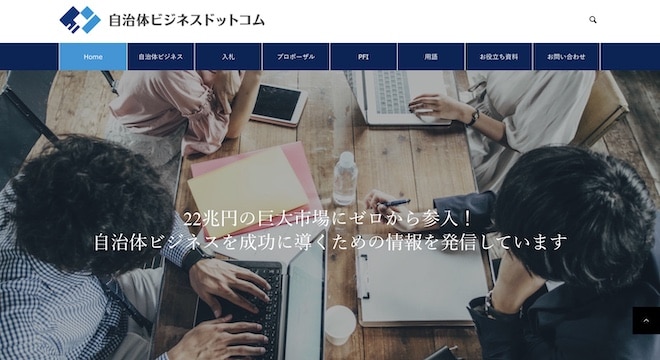
| Media name | Jichitai Business.com |
| Media URL | https://www.b2lg.co.jp/jichitai/ |
| Concept / Theme | Information to help succeed in the local government business |
| Operating company | LG Breakthrough Co., Ltd. |
| Launch year | 2017 |
| Objectives | Lead generation New customer acquisition |
“Jichitai Business.com” is a company that provides solutions for businesses seeking to contract work from local governments and public institutions.
Although the company had previously launched an owned media platform, they believed that there were no meaningful online touchpoints with companies, and as a result, the media was not actively operated.
To break this situation, they implemented content marketing. After about six months, page views grew by approximately 20 times. The key reason for this growth was that they continuously recorded performance changes as numerical data when creating content and used those insights to drive improvements.
They also achieved their goal of leveraging the owned media as a core business asset.
Despite being a small company, this is a successful example of automating sales through the effective use of an owned media platform.
Techro’s achievements in supporting LG Breakthrough’s content marketing are introduced on our “Case Studies” page.
【Techro Support】
Success Story ②: J&U Co., Ltd. “PAPER AD”
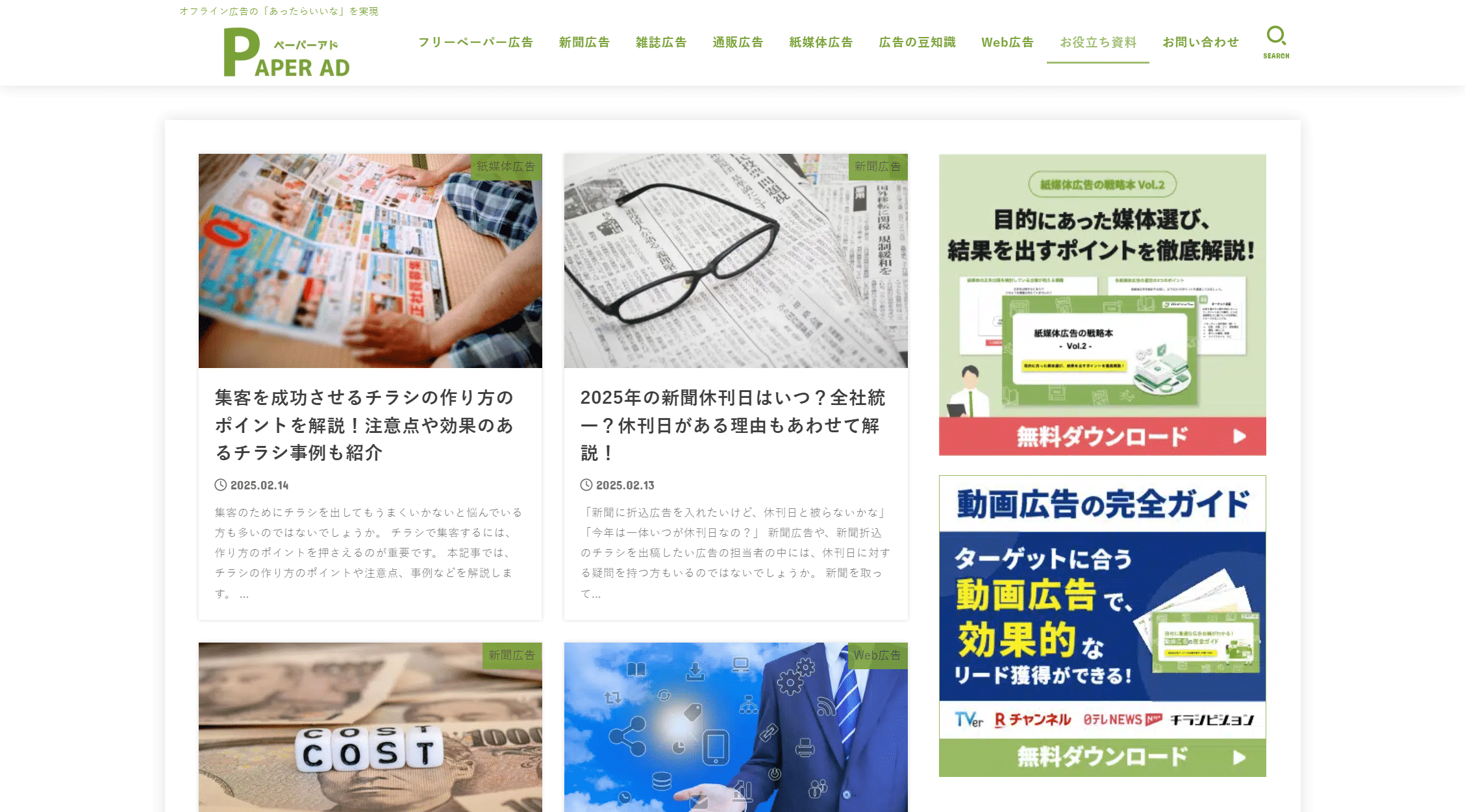
| Media name | PAPER AD |
| Media URL | https://j-you.co.jp/blog/ |
| Concept / Theme | Sharing information about offline advertising |
| Operating company | J&U Co., Ltd. |
| Launch year | 2020 |
| Objectives | Lead generation New customer acquisition |
J&U Co., Ltd., an advertising agency, received support from Techro starting from the launch of their owned media. By launching and continuously operating “PAPER AD,” they succeeded in acquiring new leads from industries that had never generated inquiries before.
Subsequently, we also supported the implementation of HubSpot for lead management and nurturing.
By organizing sales processes and configuring HubSpot, they achieved centralized management and improved efficiency in sales operations. Visualizing sales and inventory status led to a 5% increase in revenue.
You can find more details in the following case studies:
Reference: “Achieving Inquiries from Other Industries and Boosting Sales Motivation Through Owned Media | J&U Co., Ltd.”
Reference: “[Revenue Up 5%] Visualizing Sales Through HubSpot Operations Support—What Were the Measures That Significantly Increased Revenue and Profit Margins Compared to the Previous Year? | J&U Co., Ltd.”
Techro’s achievements in supporting J&U’s content marketing are introduced on our “Case Studies” page.
Reference: “Achieving Inquiries from Other Industries and Boosting Sales Motivation Through Owned Media | J&U Co., Ltd.”
Reference:“[Revenue Up 5%] Visualizing Sales Through HubSpot Operations Support—What Were the Measures That Significantly Increased Revenue and Profit Margins Compared to the Previous Year? | J&U Co., Ltd.”
Techro’s achievements in supporting J&U’s content marketing are introduced on our “Case Studies” page.
【Techro Support】
Success Story ③: Reloclub Co., Ltd. “RELO General Affairs & HR Times”
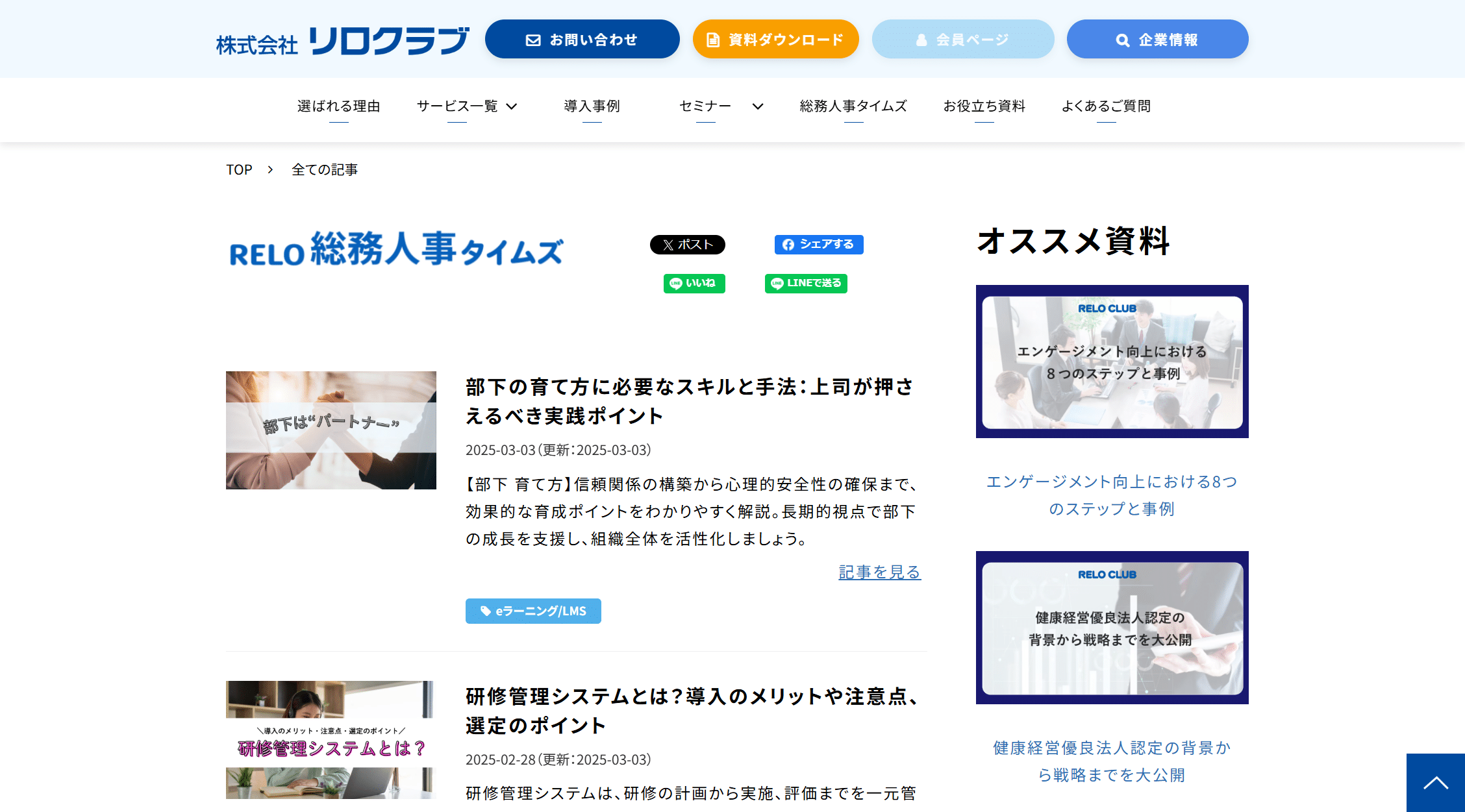
| Media name | RELO General Affairs & HR Times |
| Media URL | https://www.reloclub.jp/relotimes/article |
| Concept / Theme | Information related to general affairs and human resources |
| Operating company | Reloclub Co., Ltd. |
| Launch year | 2023 |
| Objectives | Lead generation New customer acquisition |
Reloclub Co., Ltd. provides employee benefits outsourcing services and operates “RELO General Affairs & HR Times” as its owned media.
Although the site had strong domain authority and high page views, the challenge was that it was not generating inquiries.
After outsourcing the media operations to Techro, we conducted CV-focused keyword selection and site improvements. As a result, inquiries increased, and the media evolved into a stronger revenue-contributing asset.
This is a successful example of revenue growth achieved through CV optimization.
Techro’s achievements in supporting Reloclub’s content marketing are introduced on our “Case Studies” page.
【Techro Support】
Success Story ④: NTT Printing Co., Ltd. “Kachiaru Support”
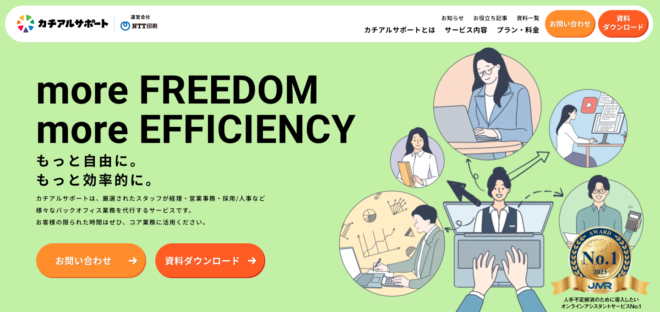
| Media name | Kachiaru Support (Owned Media) |
| Media URL | https://kachiarusupport.nttprint.com/column |
| Concept / Theme | Introducing BPO services |
| Operating company | NTT Printing Co., Ltd. |
| Launch year | 2024 |
| Objectives | Lead generation New customer acquisition |
NTT Printing Co., Ltd. provides BPO services and operates the “Kachiaru Support Owned Media.”
With limited internal resources, the company needed to prepare various content for the owned media while also managing other initiatives such as exhibiting at trade shows once or twice a month. They recognized the need for a partner both in terms of resources and expertise.
By outsourcing owned media operations, they successfully reduced internal workload while achieving tangible results.
Techro’s achievements in supporting NTT Printing’s content marketing are introduced on our “Case Studies” page.
【Techro Support】
Success Story ⑤: JAF Media Works Co., Ltd. “JAF Torecolumn”
| Media name | JAF Torecolumn |
| Media URL | https://jaf-training.jp/column/ |
| Concept / Theme | Sharing information on traffic safety |
| Operating company | JAF Media Works Co., Ltd. |
| Launch year | 2024– |
| Objectives | Lead generation New customer acquisition |
JAF Media Works Co., Ltd. provides JAF Traffic Safety Training and operates “JAF Torecolumn” as its owned media.
The company did not have an internal marketing department. Although they attempted to work on customer acquisition, they were unsure whether their efforts were effective or which initiatives would deliver the best results.
They therefore requested Techro’s owned media support. From launching the media to acquiring page views and conversions, Techro provided end-to-end support, resulting in successful lead generation through content.
Techro’s achievements in supporting JAF Media Works’ content marketing are introduced on our “Case Studies” page.
For companies that want more than short-term clicks and aim to establish authority in the Japanese market, partnering with an SEO-focused team can make a significant difference.
To explore how your company can build a sustainable search presence in Japan, consider reaching out to Techro Inc. for a consultation and strategic assessment.
Free owned media management service materials
We offer a comprehensive support menu and track record, from strategy design to production, operation, and performance measurement.
- Explaining how to launch your own media
- Explaining content marketing
- A must-see for those who want to maximize the effectiveness of their owned media
- And more