BLOG
15 Successful Content SEO Case Studies|Key Success Factors and Implementation Steps Explained
Content SEO is one of the marketing methods with many advantages, such as enabling continuous customer acquisition while keeping advertising costs low.
Even companies that already operate their own websites may be considering introducing content SEO at the time of a site renewal.
However, to achieve results from content SEO as quickly as possible, expertise and experience are required.
In addition, before getting started, it is essential to carefully examine what types of content and target audiences are suitable for your products or services; otherwise, it will be difficult to continue producing content over the long term.
In this article, we introduce successful examples of content SEO implemented by companies.
By reviewing cases that have actually delivered results, we hope you can use them as a reference when creating your own content.
Teclo Inc. also offers a free resource titled “How to Measure Article Performance and Identify Improvement Measures Based on Root Causes.”
B2B companies facing challenges such as stagnant page views on their owned media are encouraged to take a look.
Free owned media management service materials

We offer a comprehensive support menu and track record, from strategy design to production, operation, and performance measurement.
- Explaining how to launch your own media
- Explaining content marketing
- A must-see for those who want to maximize the effectiveness of their owned media
- And more
Contents
- 1 What Is Content SEO?
- 2 15 Content SEO Case Studies
- 3 Six Steps for Implementing Content SEO
- 4 4 Key Points for Succeeding in Content SEO
- 5 5 Benefits of Engaging in Content SEO
- 6 Three Disadvantages of Content SEO
- 7 3 Points to Note When Implementing Content SEO
- 8 Characteristics of Companies That Should Outsource Content SEO
- 9 Summary: Learn success patterns from content SEO case studies
What Is Content SEO?

Before looking at examples of content SEO, let’s first review what content SEO is.
Content SEO is a method of attracting organic search traffic from search engines such as Google to your website by publishing high-quality content.
In content SEO, article-based content is mainly used.
In recent years, web-based customer acquisition has gained attention, but placing advertisements on other websites can be very costly.
Although it takes time and effort to publish articles, once an article ranks highly in search results, it can continuously drive traffic to your website.
Depending on the content, it is possible to acquire leads across a wide range of audiences, from users with clear needs (explicit demand) to those whose needs are still vague (latent demand).
Related article: [2025 Latest] 21 Recommended SEO Consulting Companies: How to Choose Without Failing and Cost Guidelines Explained by Experts
Difference Between Content SEO and Content Marketing
Content SEO is often confused with “content marketing.”
Content marketing is a marketing approach that uses content to communicate with customers and guide them toward purchase decisions.
However, content used in content marketing is not limited to articles.
It also includes video content such as YouTube, social media, white papers, email newsletters, and more.
The key feature of content marketing is that it creates multiple touchpoints with customers through diverse types of content.
On the other hand, content SEO relies solely on search engines as the customer touchpoint.
Content SEO is therefore one marketing tactic and can be considered one component of content marketing.
Difference Between Content SEO and SEO
Content SEO is also one type of SEO initiative.
SEO stands for Search Engine Optimization.
SEO measures can broadly be divided into two categories:
External SEO: Measures to acquire backlinks to a website
Internal SEO: Measures to optimize the internal structure of a website
Content SEO falls under internal SEO measures.
In addition, to rank articles highly in search results, other internal SEO measures such as user-friendly site design and proper internal linking are also essential.
Related article: Complete Guide to Outsourcing Content SEO Without Failing: 15 Recommended Companies, Costs, and Selection Tips
15 Content SEO Case Studies

When introducing content SEO, deciding what kind of content to create can be challenging.
Content should not be created randomly; it is important to publish information that your company can confidently stand behind.
Successful content SEO also contributes to brand building.
Below, we introduce successful content SEO case studies from various companies. Use them as reference when planning your own content.
8 Successful Content SEO Examples from Companies
Content strategies vary depending on industry and business type.
Here, we introduce three B2B companies and five B2C companies.
freee Inc. (B2B)
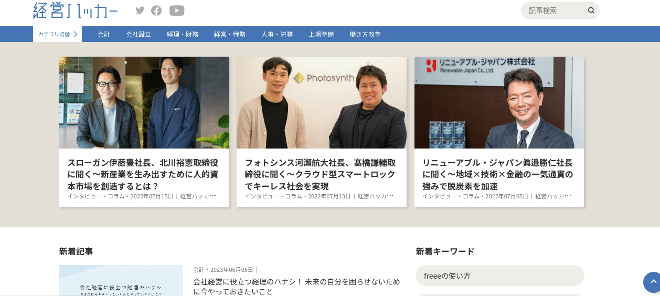
Source: Keiei Hacker
freee Inc., which operates Keiei Hacker, provides cloud services that streamline administrative tasks for small businesses and sole proprietors.
Keiei Hacker targets newly established companies and freelancers, sharing know-how related to accounting and administrative work.
In addition to high-quality content that addresses search intent, the CTA design that guides users to freee’s own products is excellent.
Despite the large volume of content, the site is divided into 11 categories, making it easy for users to navigate.
The ability to switch categories between individuals and corporations is also a unique feature.
Articles are written and supervised by certified public accountants and tax accountants, ensuring high expertise and credibility—key factors behind their content SEO success.
LIG Inc. (B2B)

Source: LIG Inc.
LIG Inc. provides system development, web support, and DX consulting services.
Their content mainly covers web-related topics such as AI, design, and marketing.
Because LIG has extensive experience supporting corporate websites, its articles are written in a friendly and easy-to-understand tone.
Many of their web-related keywords rank at the top of search results.
JR East Marketing & Communications, Inc. (B2B)

Source: Kikukoto
JR East Marketing & Communications is an advertising company under JR East.
Its owned media “Kikukoto” publishes columns on advertising, including transit advertising, as well as marketing topics.
Many articles rank highly for keywords such as “bus stop advertising” and “transit advertising,” attracting users interested in advertising.
Mitsumoa Inc. (B2C)
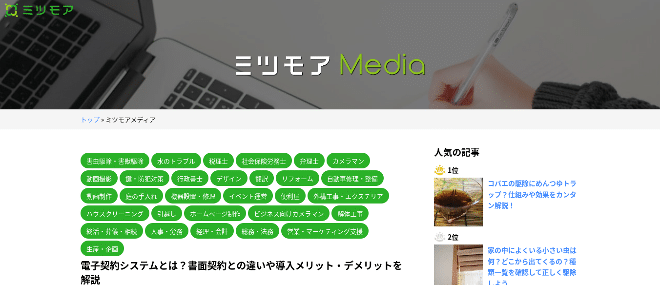
Source: Mitsumoa Media
Mitsumoa operates a matching service that connects users with professionals such as lawyers and cleaning companies through a simple quotation process.
Mitsumoa creates content both for service providers and for users seeking services.
Mitsumoa Media targets users and covers a wide range of topics, from pest control and home renovation to business fields such as general affairs and accounting.
It ranks highly for many lifestyle-related keywords such as “mouse extermination cost.”
Mitsui Sumitomo Insurance Company, Limited (B2C)
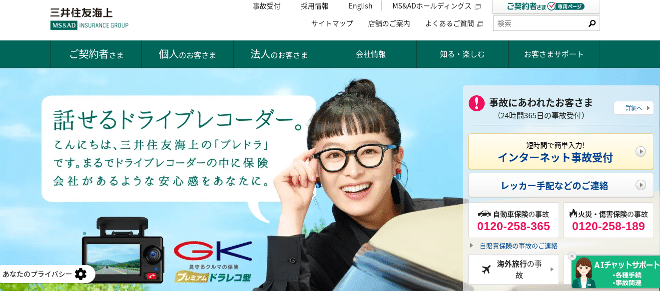
Source: Mitsui Sumitomo Insurance
Mitsui Sumitomo Insurance started content SEO in January 2022 when it released a premium version of its dashcam-equipped auto insurance.
The company created content that addresses user concerns such as “insurance is hard to understand” and “I don’t know who to consult about insurance.”
They focused on attracting users whose interest in dashcams had already become apparent, using related keyword articles.
Initially, they published six articles per month, and about 70% of them ranked highly in search results.
As a result, traffic to document request and inquiry pages reached 200 visits per month.
Tsuchiya Bag Factory (B2C)

Source: Tsuchiya Bag Factory
Tsuchiya Bag Factory is a long-established manufacturer of leather products such as school bags, handbags, and wallets.
Their content is published as a “Journal.”
In addition to product promotion, the journal shares craftsmanship philosophies, corporate values, and the concepts behind new products.
They also interview in-house artisans, shoemakers, and watchmakers, showcasing their approach to craftsmanship.
The site features a simple yet refined design, creating the feel of a high-quality magazine.
This content contributes not only to SEO but also significantly to brand building.
Lion Corporation (B2C)
Source: Lidea
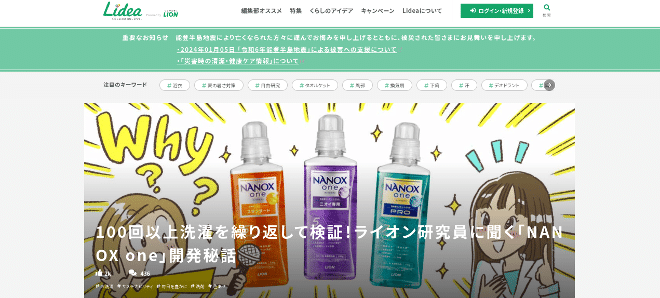
Lion Corporation manufactures household products such as toothbrushes and detergents.
Lidea shares lifestyle tips that make “ordinary days feel a little special.”
The content is also shared on social media, with clear paths for dissemination.
In addition to branding, it successfully builds customer loyalty and fan engagement.
Kirin Holdings Company, Limited (B2C)
Source: Kirin Beer University
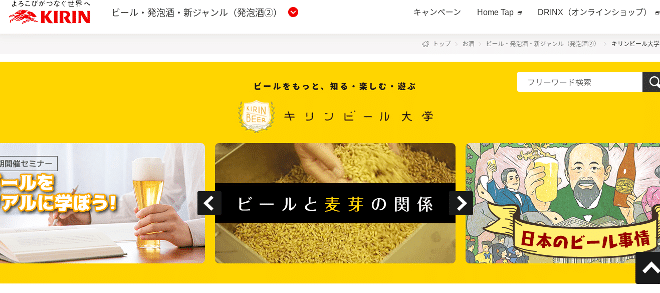
Kirin Holdings expanded from beer into food, healthcare, and medical fields.
One of its content initiatives, “Kirin Beer University”, provides information about beer.
The site explains basic beer knowledge and proposes beer-related lifestyles, encouraging purchase motivation.
At the same time, access restrictions for users under 20 years old demonstrate responsible content management.
7 Successful Content SEO Cases Supported by Teclo
Next, we introduce successful content SEO cases supported by Teclo Inc.
Wakka Inc.

Source: Wakka Inc.
Wakka Inc. specializes in system integration.
Before Teclo began its support, the company had already built an owned media site, but faced challenges in increasing the number of published contents and white papers.
After implementing measures such as article production support, rewriting existing articles, and improving CTAs, the number of page views (PV) doubled. As content rankings improved, the number of inquiries from customers also increased.
Reference: [PV 2x Increase] Successfully Increased Inquiries by Switching from Another Provider | Wakka Inc.
sora Project Inc.

Source: sora Project
sora Project provides inside sales outsourcing.
Although they had a web marketing manager, limited resources and expertise were challenges.
Teclo created 12 SEO articles per month targeting keywords such as “inside sales” and “telemarketing,” along with internal SEO improvements and CTA optimization.
After one year, page views increased about sixfold, and document downloads grew from zero to over 40 per month.
In addition, many articles achieved top rankings in SEO, enabling the company to secure a stable number of visitors from search engines every month.
Reference: Inquiries Increased by 1.5×! Acquiring New Prospects Through Content Marketing | Sora Project Inc.
FLUED Inc.
Source: Sales DX
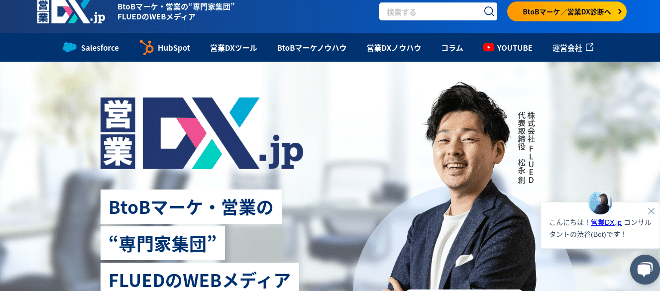
FLUED is a B2B marketing consulting firm.
Although the company had extensive expertise in content marketing, including content SEO, a lack of resources for content creation was a major challenge.
By predicting and proposing keywords expected to see increased search volume and supporting article production, Teclo helped steadily increase the website’s traffic.
Somethingfun Inc.
Source: Somethingfun
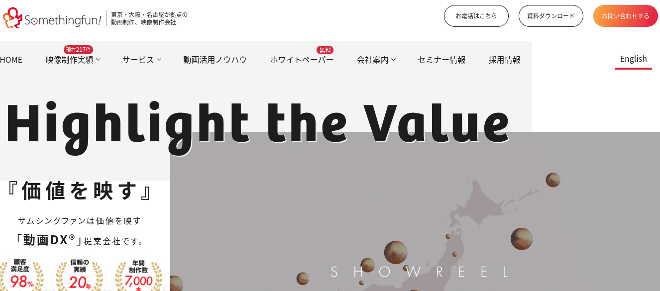
Somethingfun Inc. promotes video DX through video production services.
Before Teclo’s support, the company relied mainly on offline customer acquisition, and contracts obtained through web-based inquiries were often low in quality. As a result, they did not place much emphasis on content marketing, including content SEO.
After Teclo’s support began, the number of articles related to “video utilization know-how” increased, and the site’s page views grew to 25 times what they were before the support started.
Another significant benefit was the accumulation of previously lacking SEO and content marketing expertise within the company.
Agileware Inc.
Source: KIWI GO
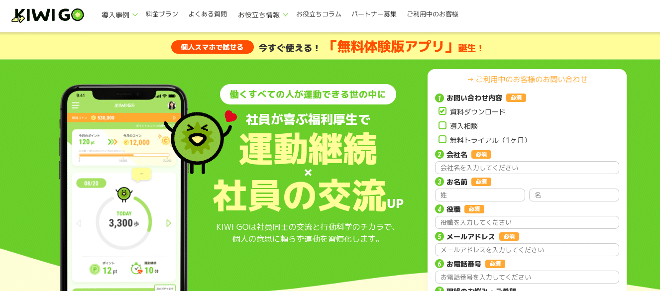
Agileware Inc. provides B2B tools such as project management software.
Previously, Teclo had supported the owned media of another service, “Lychee Redmine,” and as a result, also provided web marketing support for “KIWI GO,” a B2B app launched in 2021 that helps companies promote exercise habits among employees.
One of the key challenges was that the main keywords related to the app—such as “employee exercise shortage app” and “employee walking app”—had low search volumes, making it difficult to generate traffic through search engines.
Because the owned media aimed to raise awareness of management approaches such as “health management” and “well-being management,” it was necessary to build brand recognition among potential customers.
Through Teclo’s support, which included producing 10 articles per month and developing and improving the site structure, the KIWI GO website—despite being newly launched—achieved five times the page views it had before support at an early stage.
J&YOU Co., Ltd.

Source: J&YOU
J&YOU Co., Ltd. handles newspaper advertising materials and flyers.
At J&YOU, outbound phone sales had been the primary sales method, which made lead acquisition a major challenge.
After Teclo supported the launch of an owned media site and the creation of 10 content articles per month, the company achieved first-place rankings for targeted keywords, leading to a large increase in conversions.
Today, the site ranks highly for many keywords and continues to generate stable traffic from search engines through the effects of content SEO.
Being Consulting Inc.
Source: Being Consulting
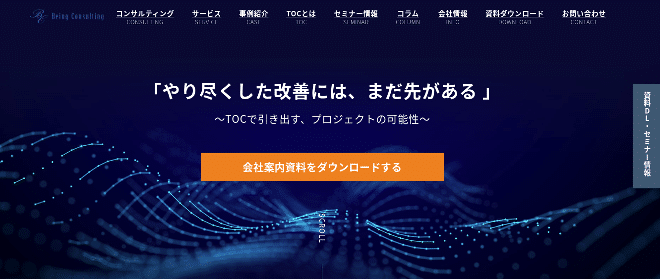
Being Consulting Co., Ltd. is a company that provides consulting services for manufacturing project management and productivity improvement.
Because the main keyword related to its business was the niche term “TOC (Theory of Constraints),” the company was receiving inquiries from the web even without implementing specific SEO measures.
However, when the number of inquiries decreased during the COVID-19 pandemic, SEO issues such as keyword selection and CTA setup became challenges once again.
As a result of Teclo providing support for the production of column-style article content, traffic to the website recovered.
In addition to niche keywords, the company increased articles targeting keywords related to project management, improved search rankings, and as a result, the number of acquired leads increased.
Reference: Inquiries Increased Through Website Production and Content Marketing | Being Consulting Co., Ltd.
Six Steps for Implementing Content SEO

When implementing content SEO, initial preparation is important.
In addition to clarifying the results and goals you want to achieve through content SEO, you should thoroughly identify and consider the strengths and characteristics of your products and services.
Here, we will explain in detail how to proceed when implementing content SEO.
Step 1: Clarify the Purpose of Content SEO and Set Goals
First, clarify the purpose for which your company will conduct content SEO.
There are various purposes for content SEO.
- Lead acquisition
- Branding
- Increase in the number of inquiries
If you do not clearly define why you are implementing content SEO, there is a risk that the direction will drift as you continue creating content.
In addition, be sure to set KPIs (Key Performance Indicators) that align with your purpose.
For methods of setting KPIs, please also refer to this article.
Reference article: A Thorough Explanation of Key Points in KPI Design for BtoB Marketing
Step 2: Design Personas and Clarify the Target Audience
Once the purpose of content creation is decided, the next step is to define in detail the target audience you want to visit and view your content.
Because content needs to satisfy what customers want to know and are seeking, it is important to be specific about the type of audience you are communicating to.
A persona refers to a concrete representation of the person who will use your product or service.
The items to consider when defining a persona are as follows.
- Age, gender, place of residence
- Occupation (job description, position, income, savings status)
- Educational background
- Lifestyle (wake-up/bedtime, commute time, working hours, how days off are spent)
- Personality and values
- Human relationships and family structure
- Hobbies, interests, dissatisfaction, concerns
The more detailed the attributes you set, the easier it becomes to grasp customer issues and search needs, making it easier to create high-quality content that satisfies customers.
Step 3: Select Appropriate Keywords
Once the target audience to whom you want to deliver content has been determined, you then consider what keywords you will use to create articles.
To select keywords, first think about the main keywords related to your products and services.
At this time, if you choose overly niche keywords that have little recognition outside the industry as your main keywords, it will be difficult to achieve the desired level of search traffic to your site.
As main keywords, try to choose words that are searched frequently.
For example, for a company providing cloud services that promote operational efficiency, “operational efficiency” could be considered a main keyword.
Once the main keyword is decided, further extract suggested keywords (related keywords) from it.
Because manually thinking through these takes time, use keyword selection tools such as Google Keyword Planner to create a list.
After listing them, group together different keywords that are considered to have the same search intent.
Step 4: Create High-Quality Content
Once keywords have been selected, create article content based on those keywords.
High-quality content refers to articles that satisfy readers, in other words, articles that fulfill search intent.
It is important to understand the search intent and needs—what customers want to know when they search for a keyword—and create content accordingly.
By first creating headings that include keywords and structuring the entire article before writing, you can maintain consistency in the article’s message.
Because content creation takes time, if you lack internal resources, outsourcing to writers or production companies is also recommended.
Step 5: Publish Articles and Measure Results
Once an article is completed, post it to a CMS (content management system) such as WordPress and publish it on the web.
For SEO and ranking highly in search engines, the published article must be stored as information in databases such as Google’s.
Registering a web page in Google’s database is called “indexing,” but newly launched sites are often not indexed easily, so you need to submit an indexing request using Google Search Console.
Additionally, posting article links on social media to promote them is also effective for increasing site traffic.
After publishing articles, measure results such as PVs (page views), user bounce rates, and site engagement, and improve KPIs accordingly.
Related article: What Is the Optimal Title Length for SEO? [2025 Latest] A Professional Explains Writing Techniques to Increase Click-Through Rates
Step 6: Continuously Improve and Maintain the Site
As you accumulate articles in this way, continue making improvements such as enhancing site readability and categorizing articles with similar themes.
In addition, if articles are left as-is, information becomes outdated, so review content regularly and perform rewrites as needed.
Related article: Why Small and Medium-Sized Enterprises Should Engage in Web Marketing and Recommended Measures | Including Recommended Support Companies
4 Key Points for Succeeding in Content SEO

Publishing a large number of articles does not automatically make content SEO effective.
Due to recent Google updates, the quality of articles has become particularly important for SEO.
Here, we introduce four key points for succeeding in content SEO.
- Aim for content with high customer satisfaction
- Increase the credibility of information included in content
- Implement internal SEO measures
- Select keywords that lead to specific customer actions
Let’s look at each point in detail.
1. Aim for Content with High Customer Satisfaction
High-quality articles are those that satisfy users who read them.
Customers search to find answers to their questions and things they want to know.
If an article feels misaligned with the answers they are seeking, they will quickly leave the site.
Consider search intent based on keywords and think about what article structure will communicate information clearly as you proceed with content creation.
2. Increase the Credibility of Information Included in Content
Google has stated the following regarding content.
Google’s automated systems are designed to rank high-quality content based on various factors. After identifying relevant content, they prioritize content deemed most helpful. To do so, they identify a combination of factors to determine which content excels in terms of experience, expertise, authoritativeness, and trustworthiness—collectively known as E-E-A-T.
Among these, trustworthiness is the most important. The other elements also contribute to trustworthiness, but not all need to be outstanding. For example, some content is helpful based on excellent experience, while other content is helpful due to high expertise.
Quote: About E-E-A-T and the Quality Rater Guidelines / Google Search Central
To increase content credibility, it is important to provide accurate information.
Use primary information such as data obtained through research, and for legal-related topics, include supervision by qualified experts.
3. Implement Internal SEO Measures
To rank article content highly in search results, improving article quality alone is not enough.
User-friendly site design is also important.
Additionally, linking internally to other articles on the site that provide deeper information helps create content with higher customer satisfaction.
4. Select Keywords That Lead to Specific Customer Actions
Care must also be taken in keyword selection.
Even if an article ranks highly for keywords that do not align with your company’s objectives, it will not lead to CVs (conversions or customer actions).
When creating content, think about what actions you want readers to take after reading the article.
5 Benefits of Engaging in Content SEO
Content SEO, which many companies are now adopting, offers the following benefits.
- Lower cost compared to advertising
- Ability to communicate with customers through content
- Contributes to company branding
- Accumulated content becomes an asset
- Enables continuous customer acquisition
Let’s examine these benefits in detail.
1. Lower Cost Compared to Advertising
Traditional offline advertising such as newspaper and magazine ads or TV commercials, as well as online ads placed on websites, are expensive and often difficult to measure in effectiveness.
With content SEO, initial investment is limited to costs such as server rental fees starting at around 10,000 yen and domain fees, and even if a paid CMS is used, it can be implemented at a lower cost than advertising.
However, if outsourcing site creation, costs may range from 100,000 to 1,000,000 yen depending on site scale, and in-house production also requires labor costs.
2. Ability to Communicate with Customers Through Content
Another benefit of content SEO is the interaction that arises, such as receiving questions or feedback from users about published content.
Through communication with users, you can quickly gain real opinions and potentially find hints for developing new products or services.
3. Contributes to Company Branding
By continuously distributing high-quality content aligned with keywords related to your business, you can build an image in users’ minds such as “this company is associated with this field.”
Branding is a method of differentiating your products and services by making them unique to your company.
When customers select products or services, strong branding makes your company more likely to be considered.
Another benefit is that created content can also be used as sales materials.
Related article: Five Successful BtoB Business Model Case Studies and Key Success Points
4. Accumulated Content Becomes an Asset
Content is a so-called “stock-type” asset.
If it ranks highly in search results, it can generate stable search traffic over the long term.
As more top-ranking content accumulates, the overall effect is expected to grow.
While effects may be slow to appear when content volume is low, they gradually become visible as content accumulates, which is a key benefit of content SEO.
However, even though content becomes an asset, it should not be left untouched after publication.
Regularly measure performance and maintain content by reviewing and rewriting outdated information.
5. Enables Continuous Customer Acquisition
Once content SEO gains momentum, content can continuously attract a stable number of visitors.
If articles rank highly in search results, customer acquisition can occur 365 days a year, including outside business hours and on holidays.
Three Disadvantages of Content SEO

Although content SEO has many benefits, it also has disadvantages.
The three main disadvantages are as follows.
- Content creation requires time and effort
- Both outsourcing and in-house production require a certain level of cost
- Lack of SEO knowledge and experience makes results harder to achieve
Let’s look at these disadvantages in detail.
1. Content Creation Requires Time and Effort
Content creation takes considerable time, starting from initial strategy planning and keyword selection.
Even after starting article creation, research, structuring, and writing typically take several days.
After publication, ongoing maintenance such as checking traffic and rewriting content is also essential.
Considering the time and effort involved, the workload is often too heavy to handle alongside core business operations.
2. Both Outsourcing and In-House Production Require Costs
Content SEO can be outsourced to article production or consulting companies.
However, outsourcing content SEO typically costs between 50,000 and 300,000 yen.
On the other hand, in-house production may reduce monetary costs, but the time and effort involved represent significant time costs.
Additionally, there are employment costs associated with hiring personnel who possess content SEO knowledge.
Thus, while content SEO may seem cheaper than advertising, unexpected costs can arise, requiring careful consideration.
3. Lack of SEO Knowledge and Experience Makes Results Harder to Achieve
When implementing content SEO, results may not appear quickly if there are no personnel with SEO knowledge and experience in-house.
Content SEO requires knowledge of site structure, tags, and external SEO.
While it is possible to learn independently, it is necessary to constantly stay updated on frequent Google updates.
3 Points to Note When Implementing Content SEO

Here, we explain three points that must be kept in mind when implementing content SEO.
- Maintain a mid- to long-term perspective
- Avoid focusing only on your own products and services
- Ensure the website is easy to update
Without knowing these in advance, you may find yourself thinking “this wasn’t what I expected” after implementing content SEO.
Let’s look at each point in detail.
1. Maintain a Mid- to Long-Term Perspective
Keep in mind that content SEO is a mid- to long-term initiative.
Especially right after launching a site, it is unlikely to rank highly or see rapid increases in traffic.
Rather than giving up because results are not immediate, plan to accumulate content over six months to a year or more while measuring performance.
If content steadily increases and ranks well, page views will certainly grow.
However, if SEO measures are insufficient, blindly increasing content can be counterproductive, so consulting a professional may be advisable if results are unclear.
2. Avoid Focusing Only on Your Own Products and Services
It is natural to want to focus on promoting your own products and services on your website.
However, if you focus only on self-promotion, users will stop visiting your site.
Content should primarily focus on “articles users want to read” and “useful articles.”
By continuously satisfying user needs through content, awareness of your products and services will naturally follow.
If readers think, “I’ll try that service from the site I always read” or “A product from a company that provides helpful information might be easy to use,” then you have succeeded.
Related article: Seven Measures to Introduce for New BtoB Marketing Development and Tips for Success
3. Ensure the Website Is Easy to Update
If updating a website is difficult, it becomes harder to improve it even after measuring results.
For example, using a poorly designed CMS can make publishing articles increasingly burdensome.
Even small frustrations such as slow image uploads or lack of integration with external tools can accumulate and become a significant burden over time.
If you plan to continue content SEO, choose a user-friendly CMS and maintain a low-stress environment for updating your website.
Characteristics of Companies That Should Outsource Content SEO

Many companies would like to fully internalize content SEO in order to reduce advertising costs.
However, successfully internalizing it from the beginning is only realistic when the company has abundant resources to allocate to content SEO and personnel with SEO knowledge in-house.
If you are unsure whether content SEO should be handled in-house or outsourced, please refer to the contents of this section.
1. There are few personnel who can be allocated to content SEO in-house
Ideally, it is preferable to assign specific employees and have them focus on content SEO.
However, advancing content SEO requires time and effort.
For companies struggling with labor shortages on the ground, it can be difficult to allocate resources to content SEO.
Especially when a site has just been launched and has few articles, and even though you want to update it frequently you lack sufficient resources, outsourcing rather than insisting on in-house production makes it easier to get the site on track.
2. SEO and website operation knowledge has not accumulated within the company
Outsourcing is also recommended when there is no one in-house with SEO or web marketing knowledge and you have to start by trial and error.
If your goal is to accumulate knowledge internally and eventually operate it completely in-house, you should choose an accompanying, hands-on consulting service rather than a company that only produces content.
They not only support you from the launch of content SEO, but also propose know-how such as SEO measures and banner placement that leads to CTAs.
Of course, you can also request article creation, so if you are starting content SEO from scratch, although it involves financial costs, the benefits of outsourcing are significant.
3. Content SEO has been implemented, but results are not appearing
If you have introduced content SEO on your own and continued operating it, but are struggling to see growth in cases such as the following, outsourcing and incorporating professional expertise can help break through the current situation.
- Article search rankings do not improve
- Site traffic does not increase
- The number of inquiries does not increase
- It does not lead to business negotiations
To achieve results with content SEO, internal SEO measures are also important.
By reviewing keyword selection and site structure, there are many cases where results appeared faster than expected.
In addition, how to choose a content SEO company is explained in detail in the article below.
Related article: Five points for choosing a content SEO company | Introducing the benefits and 32 recommended companies
Summary: Learn success patterns from content SEO case studies

Content SEO is a marketing method that can attract customers stably once it gains momentum.
However, starting with little knowledge makes it difficult to achieve results, especially when it comes to setting target audiences, selecting keywords, and designing content.
Today, many companies are implementing content SEO, so it is also important to analyze and study successful patterns by looking at successful case studies and referring to ones similar to your own situation.
We hope the contents of this article will be helpful when your company introduces and implements content SEO.
In addition, Techro Inc. is distributing for free a document titled “How to measure article performance and improvement measures matched to the causes.”
BtoB companies that are facing issues such as their owned media’s PV numbers not increasing are encouraged to take a look.
Free owned media management service materials
We offer a comprehensive support menu and track record, from strategy design to production, operation, and performance measurement.
- Explaining how to launch your own media
- Explaining content marketing
- A must-see for those who want to maximize the effectiveness of their owned media
- And more